

A few months ago, I thought I had finally found the answer to buying from China.
Every time someone mentioned Taobao, another person would immediately recommend an alternative. “Just use Temu.” “AliExpress is easier.” “Amazon has the same stuff anyway.” After hearing the same suggestions over and over again, I started wondering whether Taobao was still popular because it was genuinely useful, or simply because people had grown used to it.
From an American buyer’s perspective, the alternatives seemed to solve almost every obvious problem. They had English interfaces, international shipping, familiar payment methods, and customer support designed for overseas shoppers. On paper, they looked much easier than Taobao.
So instead of assuming, I spent several weeks comparing them while shopping for the kinds of things I normally buy online: clothing, accessories, collectibles, home gadgets, and a few random impulse purchases that probably were not necessary.
What surprised me was not simply which platform was cheapest. It was how often the answer changed depending on what I was trying to buy.
The Alternatives Feel Better During the First Five Minutes
This is probably the biggest advantage of platforms like Temu, AliExpress, and Amazon. The first time I opened Temu, I understood the shopping process almost immediately. The same was true for AliExpress. Amazon, of course, needed no explanation at all.
Search worked. Checkout was familiar. Shipping estimates were clear. Nothing felt confusing or out of place.
Then I opened Taobao.
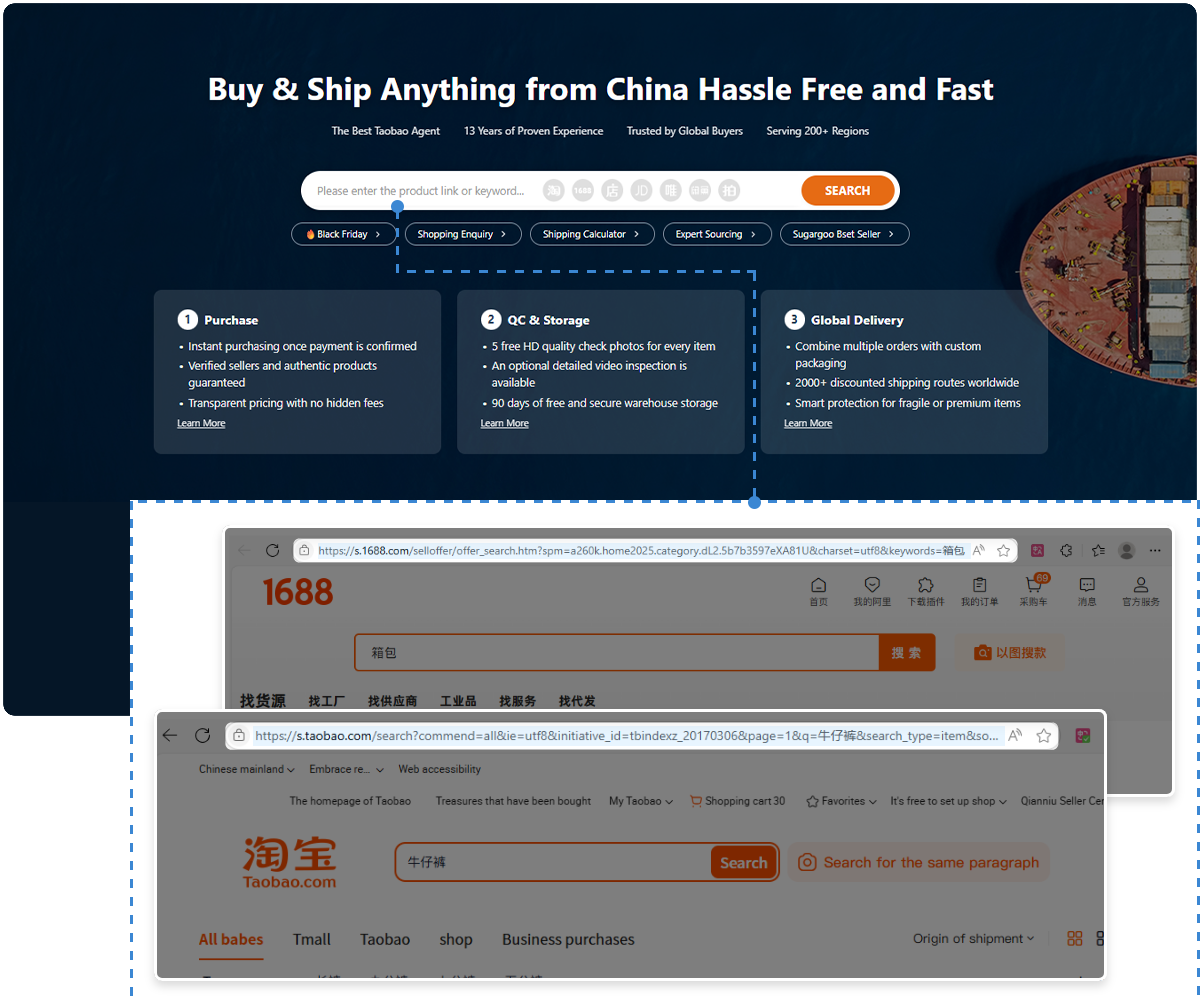
Within minutes, I was translating pages, copying product titles into Google Translate, and accidentally clicking into categories I could not even identify. If convenience is the only thing you care about, Taobao loses this comparison very quickly. There is not much debate there.
Most alternatives are clearly built with international customers in mind. Taobao was built for Chinese shoppers first, and everyone else second.
Then I Started Looking for Specific Products
This is where the comparison became less straightforward.
One evening, I searched for a simple anime display shelf. The same kind of item appeared across several platforms. Amazon had it. AliExpress had it. Temu had something similar. Then I found what looked like the original supplier-style listing on Taobao.
The gap was bigger than I expected. My first reaction was to think I had compared the wrong items, so I went back and checked the size, material, product photos, and small details in each listing. After a few rounds of comparison, the pattern became hard to ignore: a lot of products on overseas platforms looked very close to items that were already available on Chinese marketplaces.
Of course, this does not mean Taobao is cheaper in every case. Some listings are overpriced, and some alternatives may offer better deals during promotions. But for many products made in China, Taobao often feels closer to the source, which can make a real difference before international shipping is added.
To show this more clearly, I looked at several product categories that overseas shoppers commonly compare across Temu, AliExpress, Amazon, and Taobao. The prices below are not fixed benchmarks. They are sample ranges that may change with seller pricing, product size, coupons, shipping destination, and seasonal discounts. Even so, they reflect the pattern I kept running into while comparing these platforms.
| Product Example | Temu Sample Price | AliExpress Sample Price | Amazon Sample Price | Taobao Sample Price | Estimated Savings vs Amazon |
| Acrylic figure display shelf | Around $4.50–$25 | Around $8–$12 | Around $7–$15 | Around $1–$11(约 ¥7–¥75) | About 45% |
| Anime / cosplay wig | Around $10–$20 | Around $13–$23 | Around $18–$30 | Around $6–$18(约 ¥41–¥122) | About 50% |
| Foldable laptop stand | Around $3–$10 | Around $8–$15 | Around $17–$21 | Around $4–$12(约 ¥27–¥82) | About 60% |
| Ita bag / pin display bag | Around $4–$8 | Around $10–$20 | Around $18–$30 | Around $5–$15(约 ¥34–¥102) | About 60% |
(Estimated savings are calculated using the midpoint of the Amazon and Taobao sample price ranges. Actual savings may vary depending on seller, coupons, shipping destination, and exchange rate.)
The table does not prove that Taobao is always the cheapest. In some cases, Temu or AliExpress may be close, especially when a product is small, generic, or heavily discounted. Amazon can also be competitive for simple items, especially when fast delivery and easy returns are included.
But the pattern was clear: the more specific the product became, the more Taobao started to stand out. For basic products, the alternatives worked well. For niche products, Taobao often had more versions, more sellers, and more price levels.
Amazon Usually Wins When Time Matters
One purchase taught me this lesson very quickly. I needed a replacement desk accessory before a work trip, and waiting two or three weeks was not an option.
Could I have found it cheaper on Taobao? Almost certainly. Did that matter at that moment? Not really.
Amazon had it at my door in two days. Sometimes convenience is not about interface design or product discovery. Sometimes it is simply about speed.
If you are buying something you need immediately, Amazon remains difficult to beat. The premium you pay often buys certainty more than the product itself.
AliExpress Lives Somewhere in the Middle
After using AliExpress for years, I have started thinking of it as a compromise platform.
It does not have Amazon’s delivery speed, and it does not have Taobao’s enormous selection. But it solves many of the barriers that make Taobao difficult for overseas buyers.
The biggest advantage is accessibility. You can search in English, many sellers already understand international shipping, and payment methods are straightforward. For casual purchases, that is often enough.
The trade-off is price and depth. For the exact same or very similar products, AliExpress is often more expensive than Taobao. Sometimes the difference is small. Sometimes it is noticeable. But for many buyers, the easier shopping experience is worth paying a little extra for.
Temu Is Easy, But It Works Best for Certain Purchases
Temu is probably the easiest platform to browse casually. The app is simple, the prices look low, and the product feed makes it very easy to keep scrolling. For small household items, accessories, storage products, and low-risk impulse purchases, Temu can feel like the simplest option.
But that convenience comes with limits. When I searched for very specific items, especially fandom-related products, character-specific accessories, or certain Chinese fashion styles, Temu often had something similar, but not always the exact thing I wanted.
That is where the difference between “cheap” and “specific” becomes important. Temu can be great when you are open to alternatives. Taobao becomes more useful when you already know exactly what you are trying to find.
The Biggest Difference Was Not Price. It Was Selection.
The more I searched, the more obvious this became.
Anime merchandise, cosplay accessories, Chinese designer clothing, limited-edition collectibles, replacement parts, older products that had already disappeared from international marketplaces — these were the categories where Taobao pulled ahead.
The platform simply felt larger. Not necessarily better organized. Not easier. Just larger.
There were many moments when I found something on Taobao that did not appear anywhere else. And if it did appear elsewhere, the listing often looked like a simplified resale version of something already available from a Taobao seller.
For mainstream products, alternatives worked perfectly well. For niche products, Taobao consistently offered more options.
So Are Taobao Alternatives Actually Better?
The answer depends on what “better” means.
If better means easier, then yes, most alternatives are easier. If better means faster, Amazon wins with very little competition. If better means fewer language barriers, AliExpress and Temu are much friendlier for new users.
But if better means finding the widest selection at lower product prices, the answer becomes more complicated.
After comparing them for myself, I stopped thinking of these platforms as direct replacements for one another. They solve different problems.
Amazon is where I go when I need something quickly. AliExpress is where I go when I want a simple international shopping experience. Temu is where I occasionally browse for inexpensive impulse purchases. Taobao is where I go when I cannot find what I am looking for anywhere else.
And surprisingly often, that is exactly where I end up finding it.
Final Thoughts
Before doing this comparison, I assumed newer international platforms had mostly replaced Taobao for American shoppers. Now I am not so sure.
The alternatives absolutely remove a lot of friction. For many people, that is enough reason to choose them. But convenience and value are not always the same thing.
The more specific your shopping needs become, the more likely you are to understand why so many experienced international buyers still keep coming back to Taobao, even after trying every alternative available.