

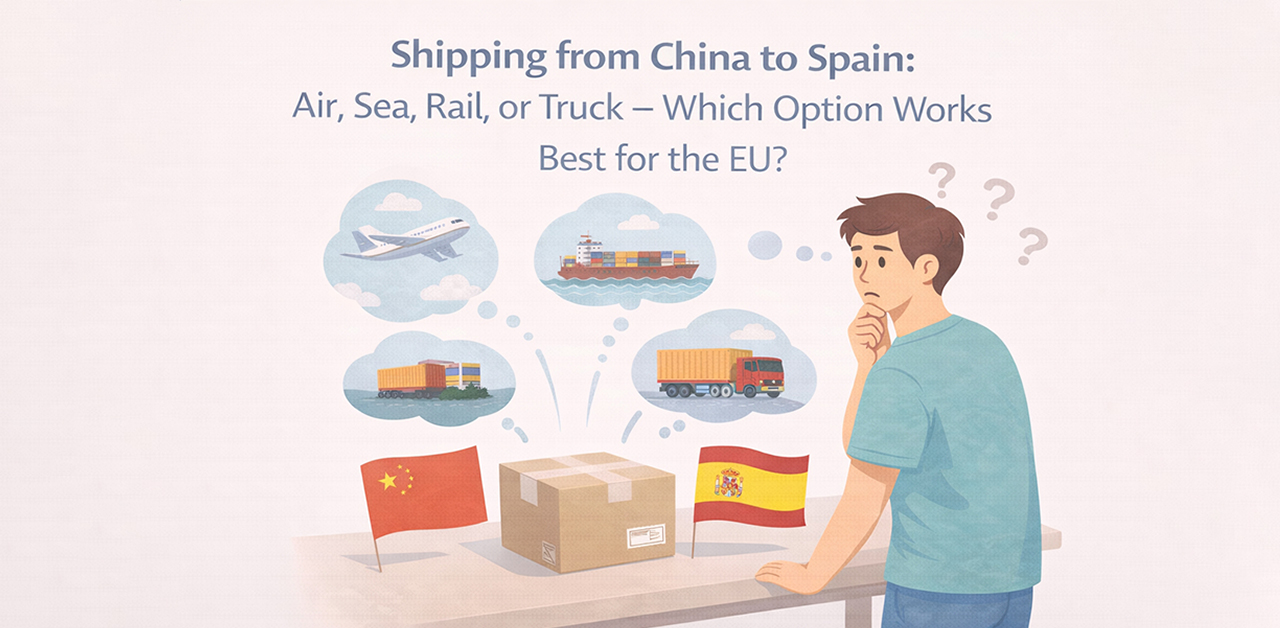
Shipping goods from China to Spain has become increasingly common for EU consumers, cross-border sellers, and small importers. Yet one question appears again and again:
Which shipping method to Spain is actually the best — air freight, sea freight, rail, or truck (road transport)?
The answer is not universal. For shipments to Spain and the wider European Union, the right choice depends on delivery time, cost structure, cargo type, and customs risk.
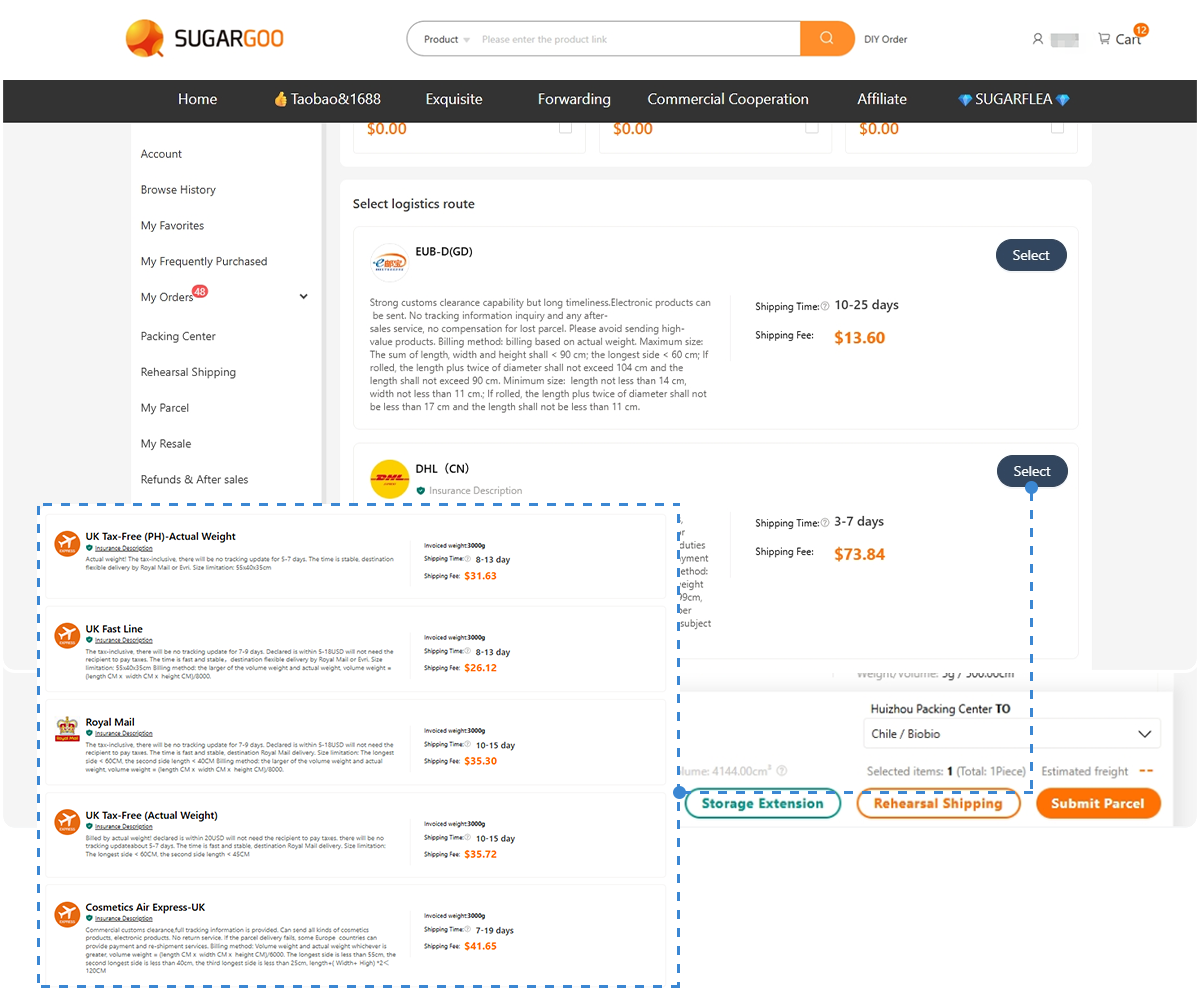
This guide compares the four main shipping routes from China to Spain using real buyer decision factors, not just surface-level prices.
Start with Real Shipping Scenarios to Spain
Before comparing routes, it’s important to understand who is shipping to Spain and why:
- Individual buyers
- Small parcels
- Flexible delivery expectations
- Limited customs experience
- EU eCommerce sellers / small B buyers
- Regular shipments
- Cost control is critical
- VAT and compliance matter
- Wholesale or heavy-cargo buyers
- Large volume or weight
- Focus on unit cost
- Require predictable clearance
Different scenarios naturally lead to different shipping choices.
Transit Time Comparison: How Long Does Shipping from China to Spain Take?
Below are realistic ranges that buyers commonly experience:
✈️ Air Freight to Spain
- Typical delivery time: 8–15 days
- Includes flight scheduling, customs inspection, and final delivery
- Suitable for urgent or high-value items
🚚 Truck Shipping (China–EU Road Transport)
- Transit time after departure: 30–40 days
- Stable for EU-wide distribution, including Spain
🚆 China–Europe Express Rail
- Average delivery time: 40–50 days
- Multiple border crossings increase total transit time
- Often chosen when cost savings outweigh urgency
🚢 Sea Freight to Spain
- Door-to-door average: 50–60 days
- Includes port handling, customs clearance, and inland delivery
- Best suited for heavy, bulky, or low-value cargo
Key insight: For Spain and much of Southern Europe, truck, rail, and sea routes are long-haul solutions, and speed differences matter less than cost control and reliability.
Shipping Cost Structure: Why Slower Routes Are Often Cheaper — but Not Always
Many buyers search for “cheapest shipping from China to Spain”, but price differences rarely come from the transport leg alone.
Key cost factors include:
- Volumetric (DIM) weight
- Consolidation efficiency
- Customs declaration accuracy
- Destination handling fees
Route-Specific Cost Behavior: How Pricing Really Works
- Air Freight
- Highest cost per kilogram
- Pricing is strongly affected by volumetric (DIM) weight
- Best suited for small, high-value shipments where speed matters more than cost
- Truck Shipping (Road Transport)
- High cost-performance ratio
- Moderate pricing with relatively stable fees
- Ideal for buyers who want balanced costs and are not extremely time-sensitive
- Rail Freight
- Similar cost positioning to truck shipping
- Offers good value for money on medium-volume shipments
- Suitable for shipments where delivery speed is flexible but cost control is important
- Sea Freight
- Lowest transport cost overall
- Requires a minimum shipment size or weight to be economical
- Has the longest transit time, making it suitable for heavy or bulk cargo with low urgency
For EU-bound shipments, especially to Spain, choosing a cost-effective route is less about finding the cheapest rate and more about matching shipment size, timing expectations, and consolidation strategy.
Best Shipping Method by Cargo Type (Spain & EU)
Choosing the right route is often easier when starting with the cargo itself:
- Small or high-value items (fashion, accessories, electronics)
- Air freight (when time-sensitive)
- Medium parcels (shoes, bags, lifestyle products)
- Truck or rail
- Large or heavy goods (furniture, equipment)
- Sea freight or rail
- Sensitive or restricted items
- Route depends on declaration support and compliance handling
In the EU market, method flexibility is more valuable than raw speed.
Customs & VAT Considerations for Shipping to Spain
Spain operates under the EU unified customs and VAT system, making compliance essential:
- IVA (VAT) accuracy is mandatory
- Incorrect declarations affect EU-wide delivery
- Inspection rates vary by transport method
Clearance tendencies by route:
- Air freight
- Faster processing
- Higher inspection likelihood
- Truck shipping
- Mature EU clearance pathways
- Smooth Spain final-mile delivery
- Rail freight
- Requires consistent paperwork across borders
- Sea freight
- Slower clearance
- Lower inspection intensity
Choosing a route to Spain means choosing a customs strategy, not just a transit time.
Stability & Risk Management: What Experienced EU Buyers Value
For seasoned buyers shipping to Spain, predictability often beats speed:
- Air: flight availability and peak-season congestion
- Rail: border delays and scheduling uncertainty
- Sea: port congestion and labor disruptions
- Truck: comparatively stable EU delivery performance
The Right Shipping Method Depends on Your Priorities
There is no single “best” shipping method from China to Spain. The optimal choice depends on:
- Cargo characteristics
- Delivery expectations
- Budget constraints
- EU customs and VAT requirements
Buyers shipping to Spain who can compare multiple routes, consolidate shipments, and adapt transport methods per order consistently reduce costs and delays.
Understanding how each shipping line works is the foundation for more predictable, compliant, and cost-effective EU logistics.