
When buying clothes from China, international buyers often discover that shipping costs vary significantly between platforms, even when the package weight and destination remain the same.
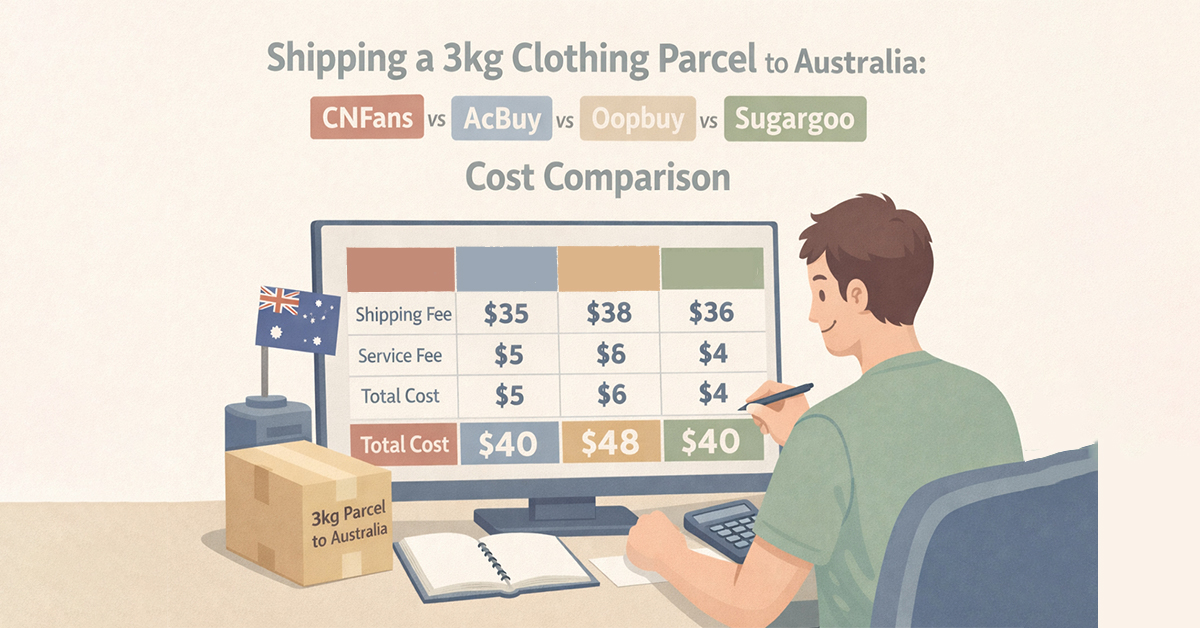
To understand where these differences come from, this article compares estimated shipping prices for a 3kg (3000g) ordinary clothing parcel shipped to Australia, using the official shipping calculators of four commonly used China shopping and forwarding platforms:
- CNFans
- AcBuy
- Oopbuy
- Sugargoo
This is a calculator-based comparison only. The figures below reflect quoted estimates, not final invoices, and are meant to highlight pricing structures rather than guarantee real-world results.
Comparison Setup: Keeping the Conditions Consistent
To reduce variables and keep the comparison fair, all platforms were tested under the same assumptions:
- Destination: Australia
- Parcel weight: 3kg (3000g)
- Product type: Ordinary clothing (non-luxury, non-sensitive)
- Packaging: No shoeboxes or oversized cartons
- Declared value: Default platform setting
- Tool used: Each platform’s official shipping fee estimator
- Discounts: Only automatically shown discounts included (no manual coupons added)
Because each platform applies its own billing logic, the goal is not to find a single “winner,” but to understand how pricing differs and why.
CNFans: Stable Mid-Range Pricing With Predictable Lines
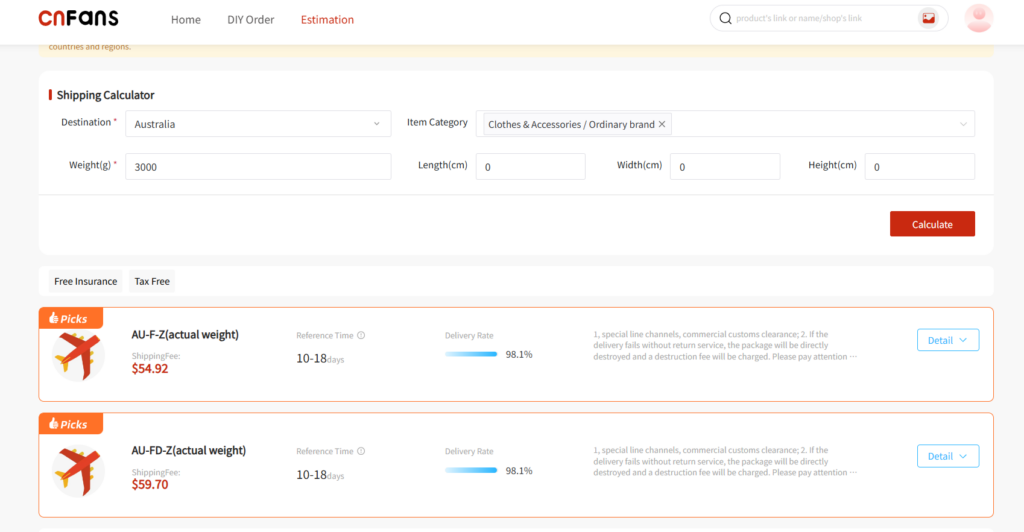
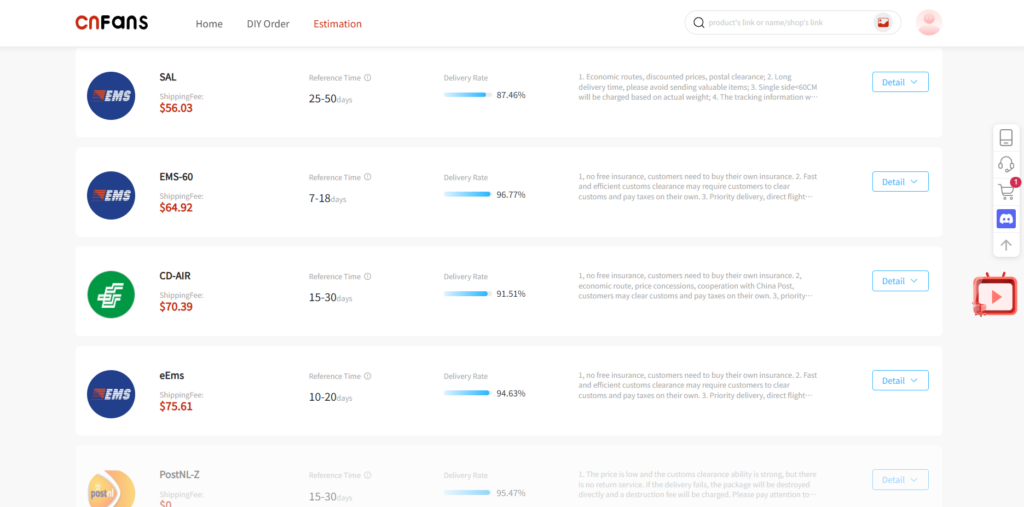
CNFans’ Australia routes generally fall into a mid-range price bracket for a 3kg clothing parcel.
Most calculator results cluster around:
- Price range: roughly USD $50-60
- Transit time: about 10-18 days for standard air lines
- Billing method: primarily actual weight for clothing routes
CNFans’ estimator emphasizes route stability and delivery success rate rather than aggressive pricing. The lack of extreme low-end options means prices appear higher at first glance, but the trade-off is clearer rules and fewer fluctuations between routes.
This makes CNFans’ calculator results relatively easy to interpret for buyers who prefer consistency over chasing the lowest possible quote.
AcBuy: Lower Entry Prices With More Rule Sensitivity
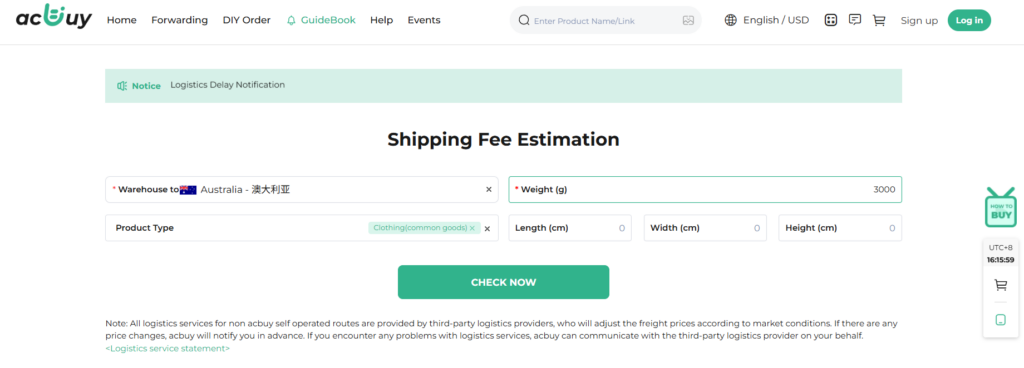
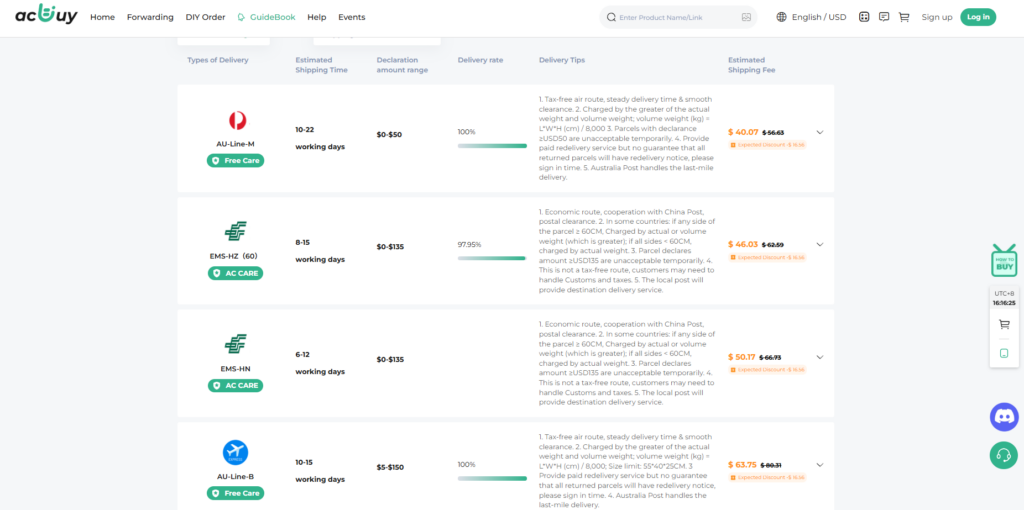
AcBuy’s shipping calculator often shows lower headline prices for Australia, especially on EMS-based or AU-specialized lines.
Typical results include:
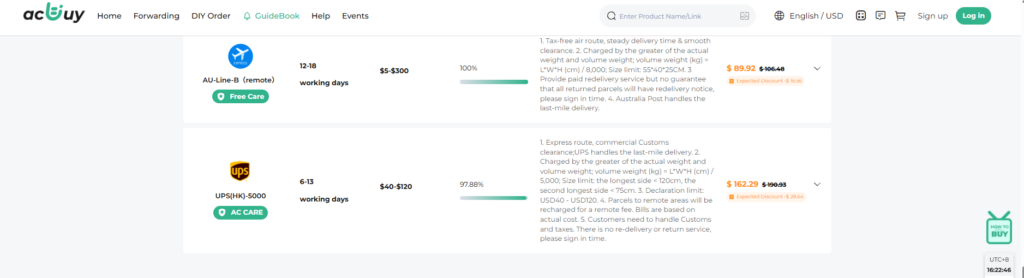
- Price range: approximately USD $40-55 after displayed discounts
- Transit time: 8-22 working days depending on route
- Billing method: actual weight or greater of actual vs volumetric weight
AcBuy’s estimator frequently attaches more conditions, such as size limits, tax handling notes, and route-specific restrictions. While the calculator price can look attractive, the final cost depends heavily on package dimensions and compliance with route rules.
This makes AcBuy appealing for price-focused buyers who are comfortable double-checking route requirements.
Oopbuy: Coupon-Driven Variability in Estimates
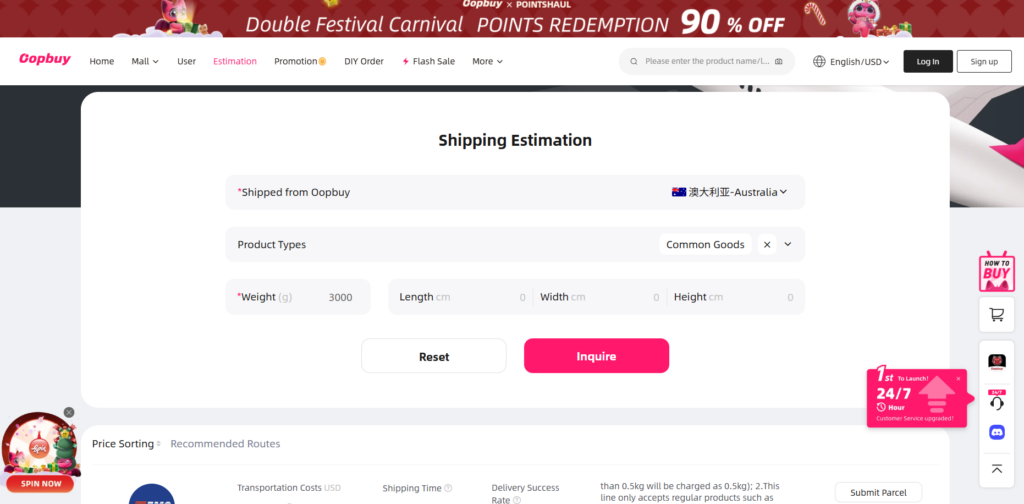
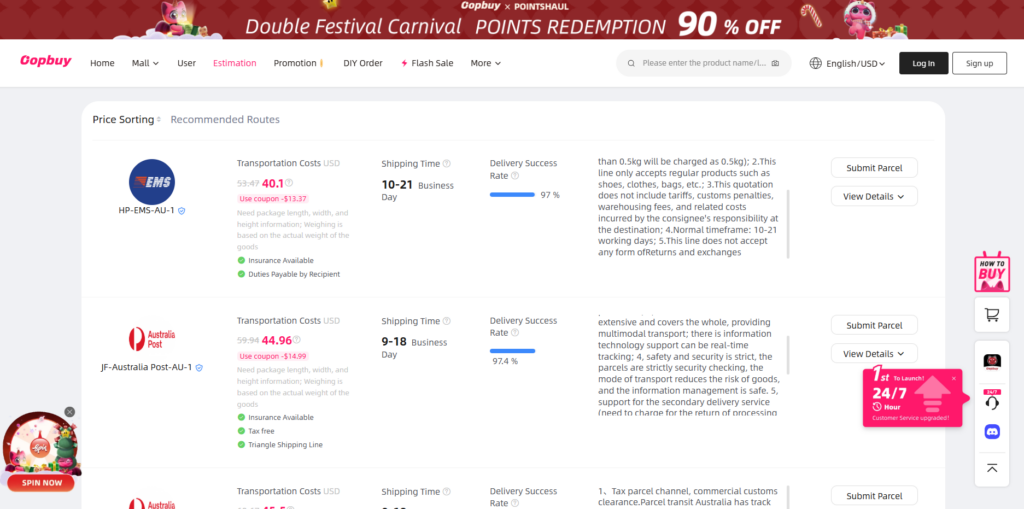
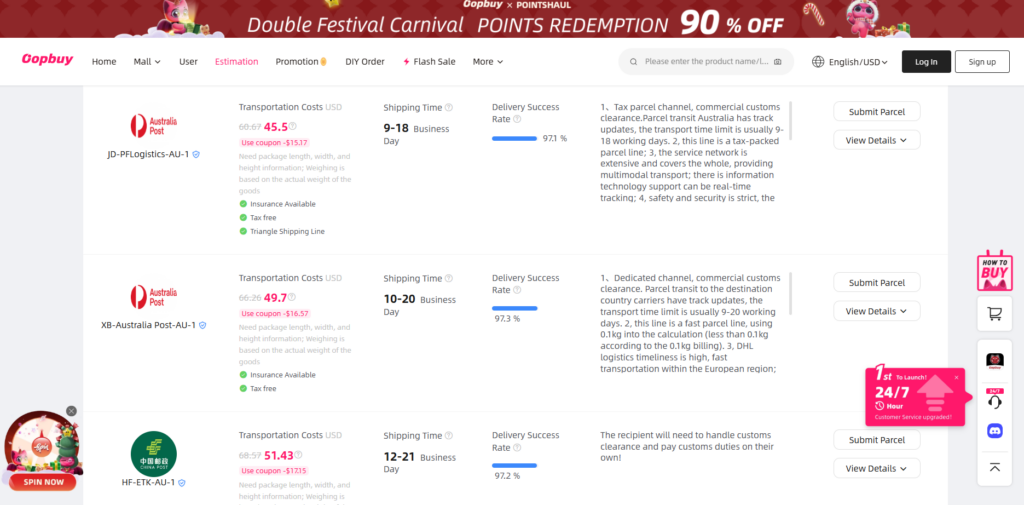
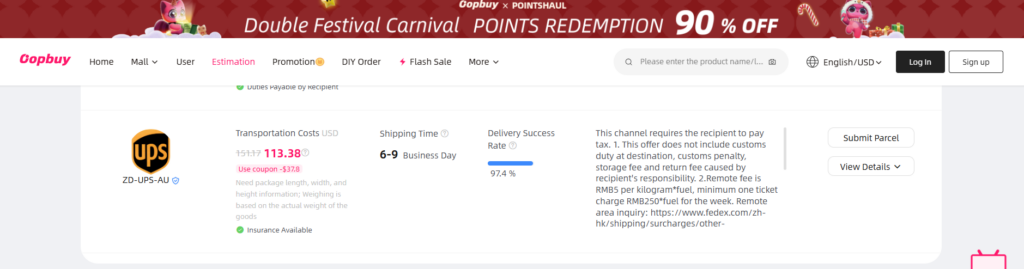
Oopbuy’s calculator results tend to show significant price variation, largely influenced by automatically applied coupons or promotional discounts.
Observed patterns include:
- Price range: around USD $40-50 with coupons applied
- Transit time: typically 9-21 business days
- Billing method: usually actual weight, with route-specific exceptions
Because coupons are embedded directly into the estimator, Oopbuy can appear cheaper than competitors at a glance. However, this also means that prices may fluctuate more often, and repeating the same calculation at a different time can yield different results.
For comparison purposes, Oopbuy’s calculator reflects a promotion-sensitive pricing model rather than a fixed baseline.
Sugargoo: Widest Route Selection and Price Spread
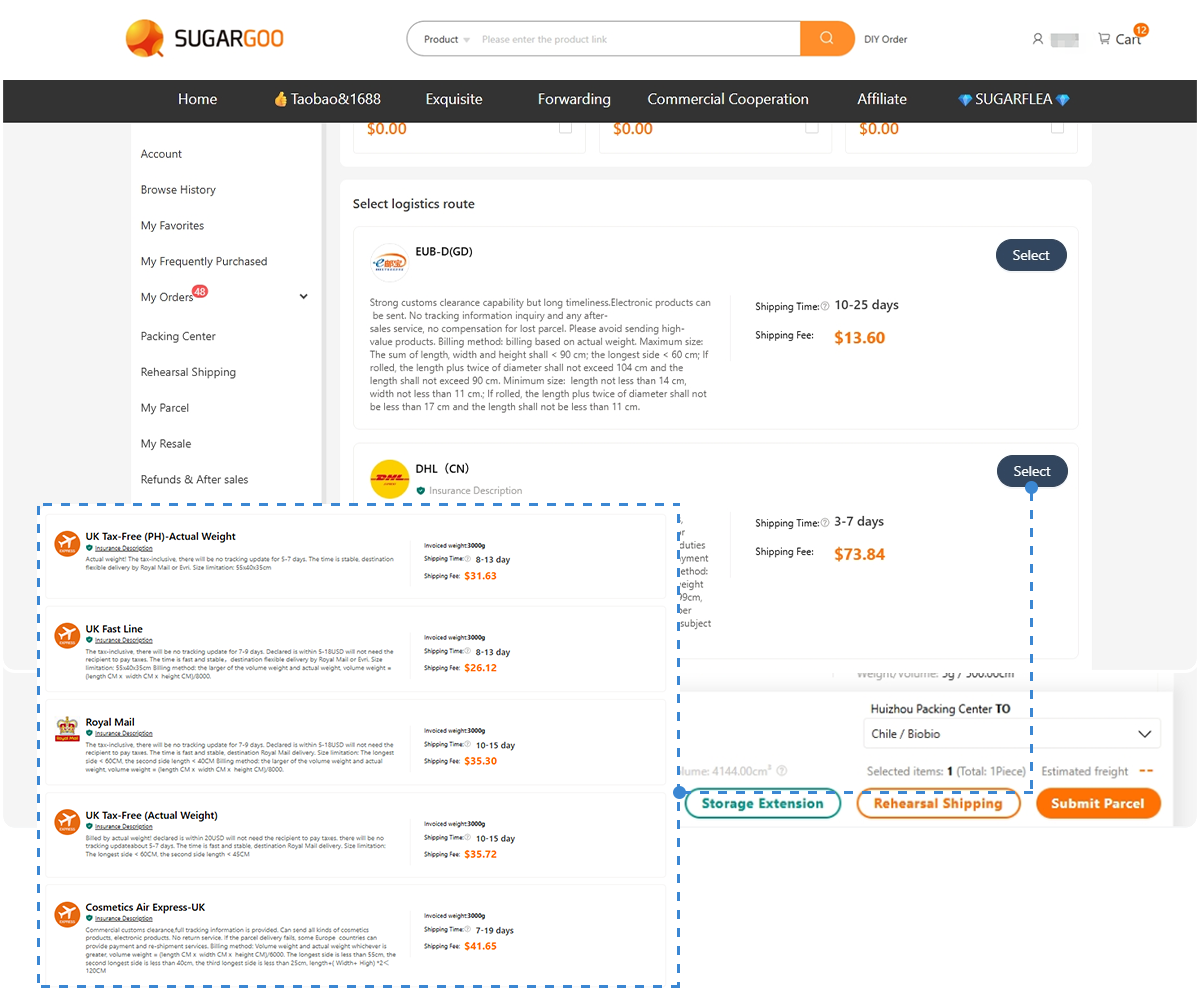
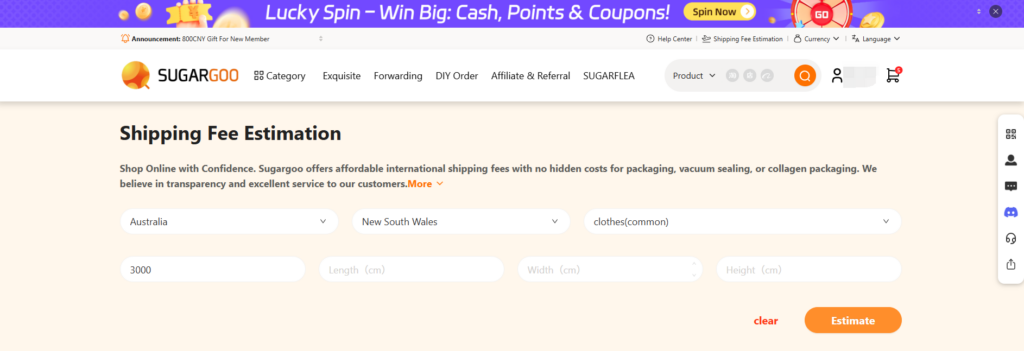
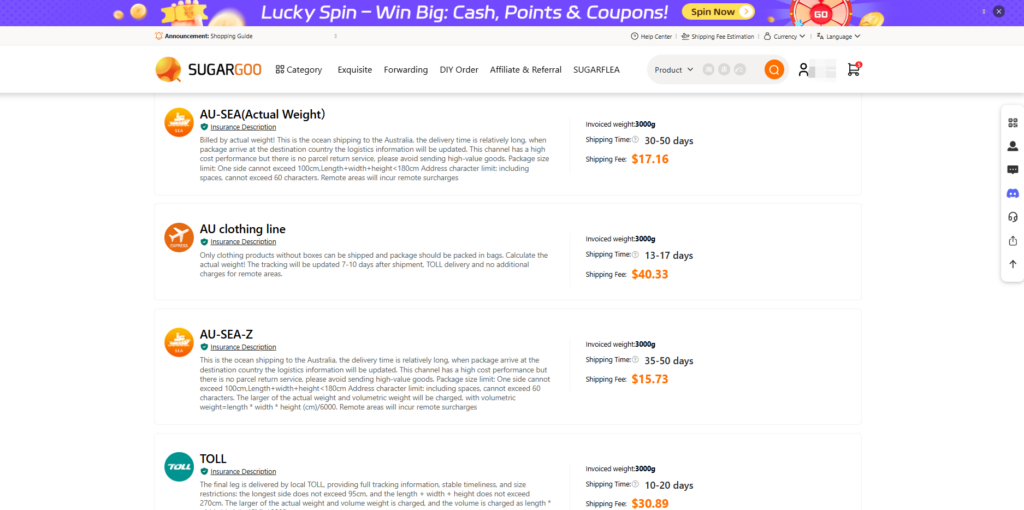
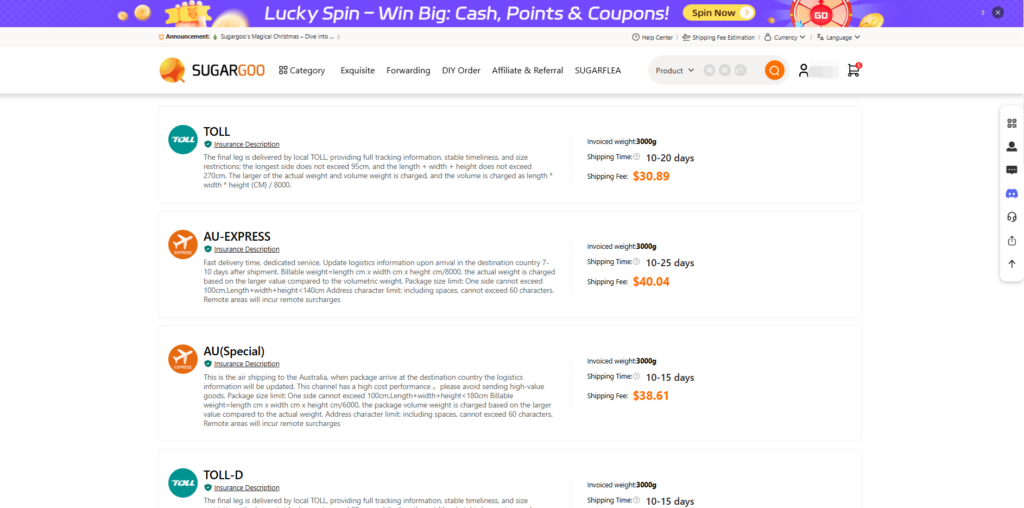
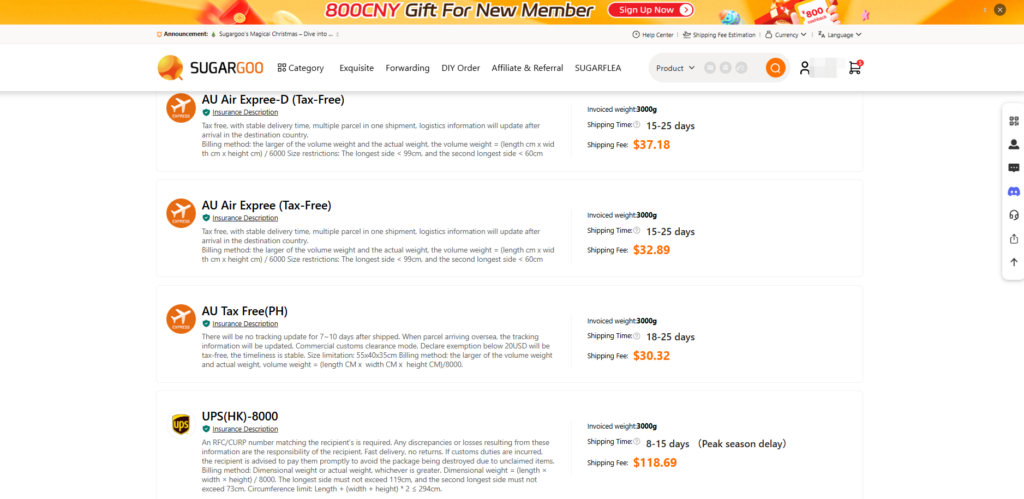
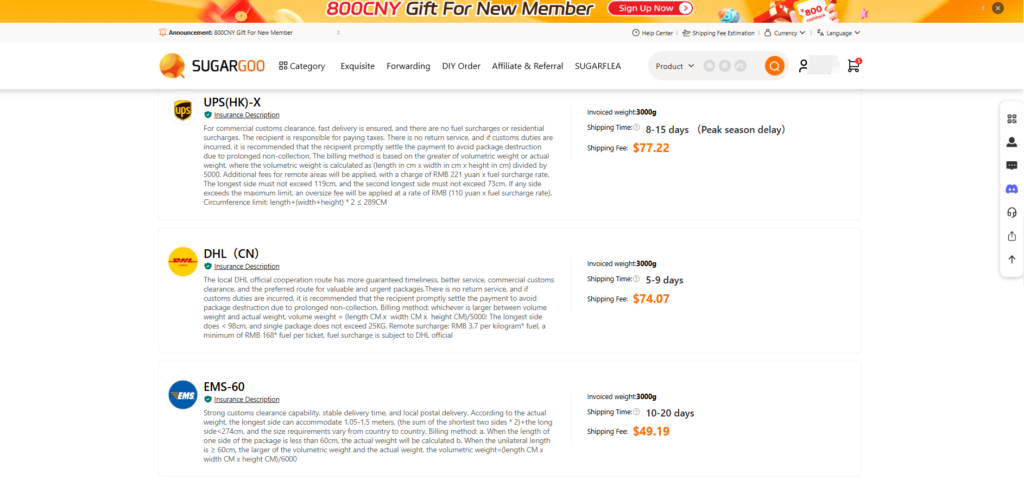
Sugargoo‘s shipping calculator produces the broadest range of estimates for a 3kg clothing parcel to Australia, largely due to its extensive route selection.
Based on calculator outputs, buyers may see:
- Low-end options:
- Sea or economy lines around USD $15-20
- Transit time: 35-50 days
- Mid-range air routes:
- Clothing lines, tax-free air routes around USD $30-40
- Transit time: 10-25 days
- Premium express options:
- DHL / UPS routes at USD $70+
- Transit time: as fast as 5-10 days
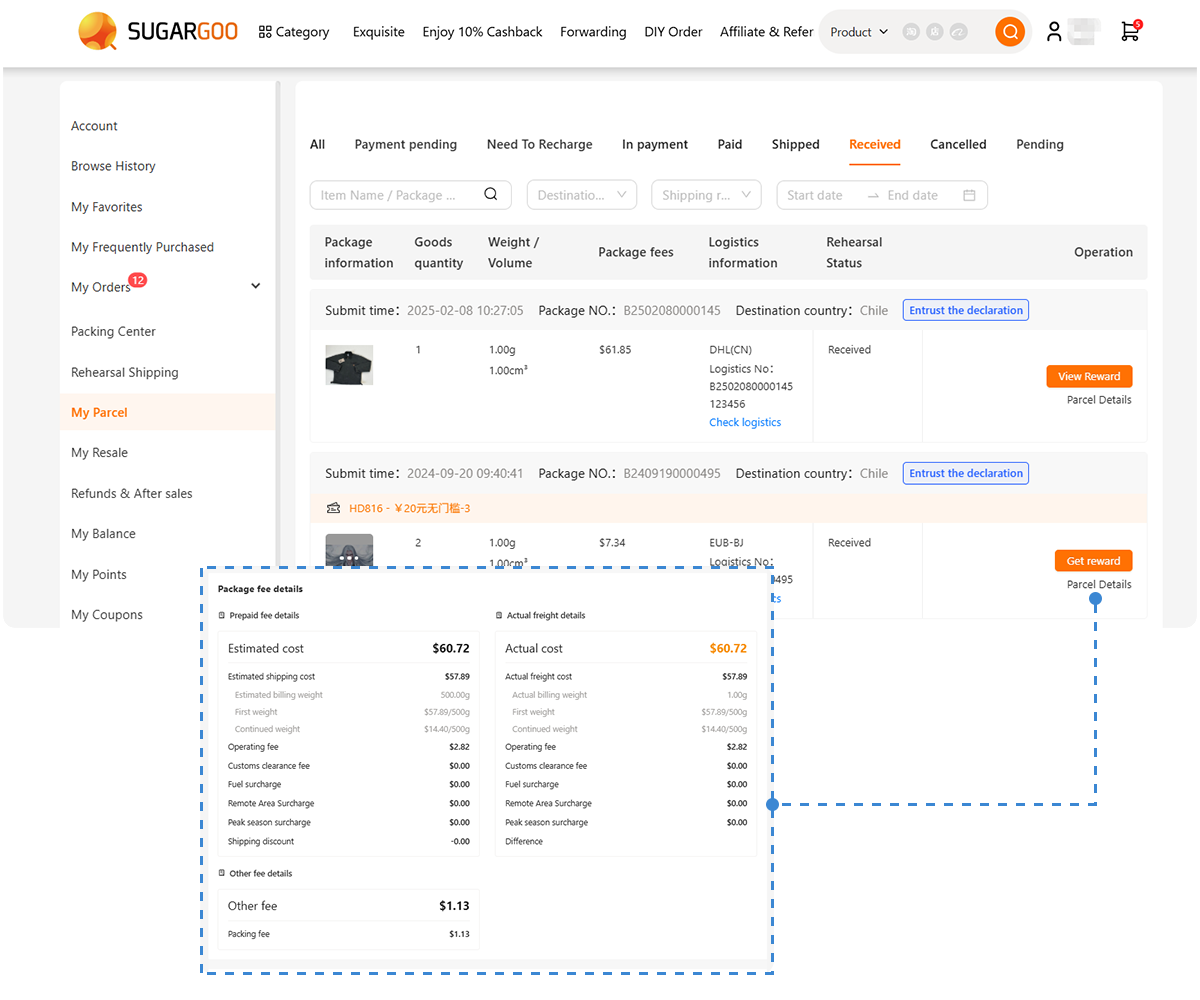
Sugargoo’s estimator clearly separates speed, cost, and service level, making it easy to visualize trade-offs. While not every route suits clothing parcels, the calculator gives buyers more flexibility to choose based on priorities, rather than pushing a single “recommended” option.
Why 3kg Doesn’t Mean the Same Price Everywhere
One of the biggest takeaways from this comparison is that “3kg” is not billed the same way across platforms.
Key factors affecting calculator results include:
- Weight Calculation Rules
Some routes charge strictly by actual weight, while others bill by the greater of actual weight and volumetric weight, using different divisors (e.g., 6000 or 8000).
- Tax and Clearance Assumptions
Tax-free or triangle shipping lines often appear more expensive upfront, but may reduce uncertainty later. Non-tax-free routes may show lower estimates but leave taxes unresolved.
- Delivery Speed vs Cost
The cheapest calculator result is often tied to longer transit times, which may not suit all buyers.
What This Comparison Is — and Isn’t
This article is designed to:
- Compare shipping calculator estimates, not final invoices
- Show relative pricing logic, not guaranteed delivery outcomes
- Help buyers understand why prices differ
Actual shipping costs may change due to packaging size, declared value, route availability, customs inspections, or seasonal demand.
Final Thoughts
For a 3kg ordinary clothing parcel shipped to Australia, shipping calculator prices can vary by more than 3× across platforms, even under identical assumptions.
Rather than focusing only on the lowest number, experienced buyers use calculators to evaluate:
- How transparent the pricing rules are
- Whether the route fits their time expectations
- What happens if delays, inspections, or issues occur
Understanding these differences is ultimately more valuable than chasing the cheapest quote on any single day.