
Shopping directly from China has become routine for many overseas buyers, but shipping is still where most confusion begins. It’s not unusual for international delivery fees to rival — or even exceed — the value of the items themselves.
One practical solution that consistently reduces these costs is package consolidation. When handled properly, consolidation shifts shipping from a trial-and-error expense into a cost you can plan and control.
In this article, we’ll break down why consolidation works, how it impacts shipping fees in real terms, and how platforms such as Sugargoo help international buyers simplify the process while minimizing risk.
Why Shipping from China Often Costs More Than Expected
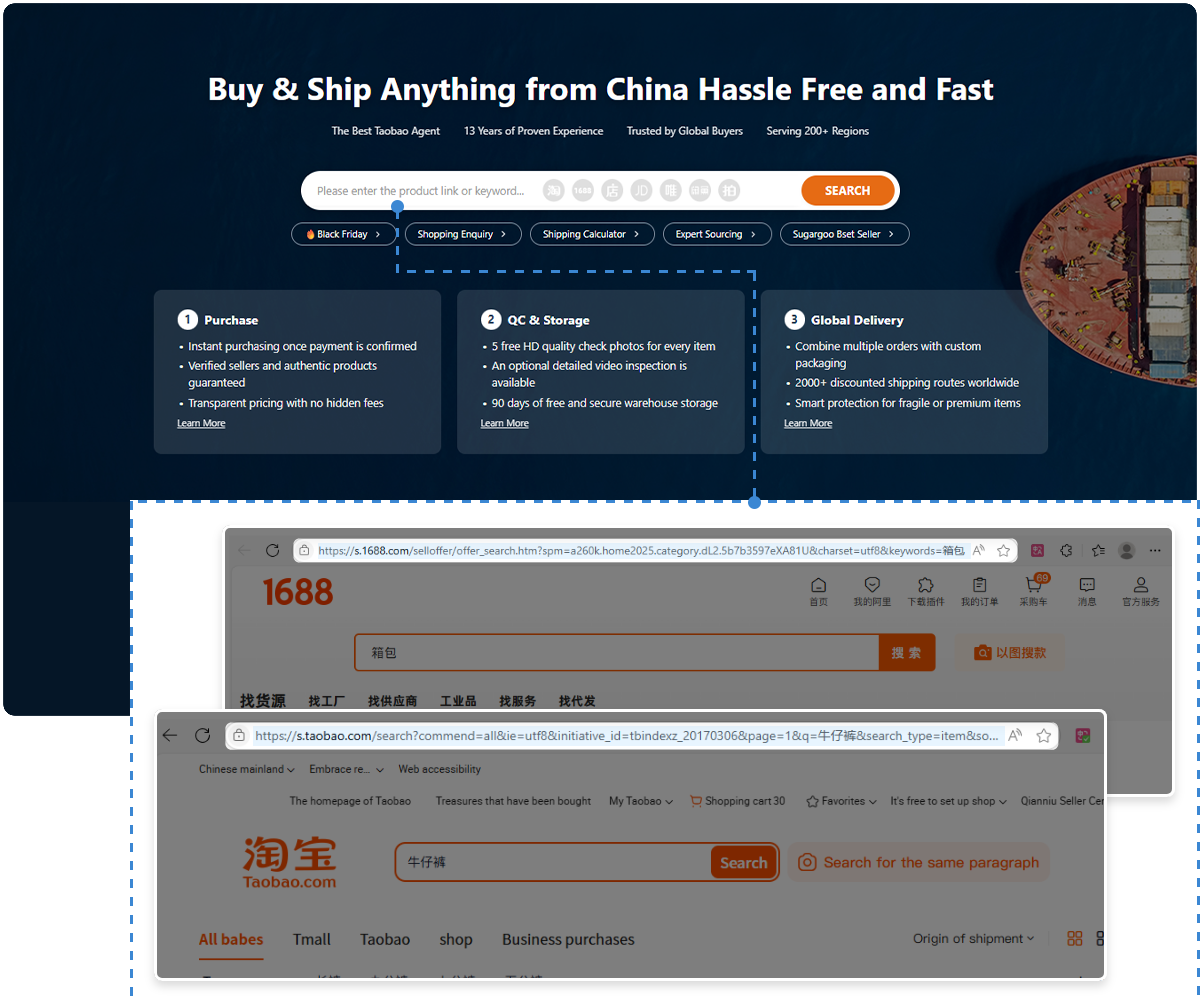
Most international buyers purchase items from multiple sellers across platforms such as Taobao, JD.com, or 1688. Each seller ships separately within China, which creates several small domestic packages.
Without consolidation, those packages are shipped internationally one by one. This leads to:
- Multiple international shipping fees
- Repeated payment of expensive “first weight” charges
- Higher handling and customs risks
- Increased chance of loss or damage
In short, shipping becomes inefficient — and inefficiency is expensive.
What Is Package Consolidation?
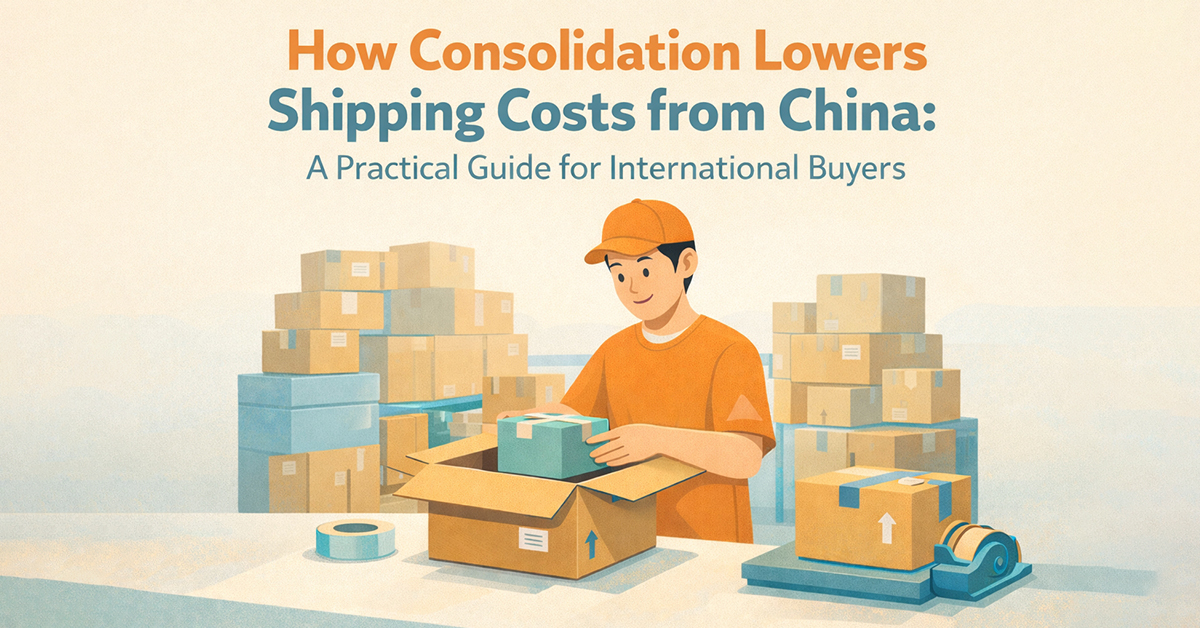
Package consolidation means combining several domestic packages into one international shipment before sending it overseas.
Instead of paying international shipping fees multiple times, buyers wait for all items to arrive at a warehouse, where they are repacked into a single parcel. This single step changes the entire cost structure of shipping.
Consolidation does not reduce courier prices — it reduces redundant costs.
How Consolidation Directly Lowers Shipping Costs
- First-Weight Costs Are Paid Only Once
Most international shipping lines charge a high initial rate for the first kilogram, with lower rates for additional weight. Shipping three separate 1kg parcels is far more expensive than shipping one 3kg parcel.
Consolidation spreads that first-weight cost across more items, significantly lowering the cost per kilogram.
- Redundant Packaging Is Eliminated
Separate sellers often use oversized boxes, thick fillers, and unnecessary outer packaging. When parcels are consolidated, excess materials are removed and items are repacked efficiently.
This reduces both actual weight and volumetric weight, which is especially important for air and express shipping lines.
- More Shipping Routes Become Available
Small, lightweight parcels often qualify only for premium courier services. Once consolidated, parcels can access:
- Tax-free lines
- IOSS-compatible EU routes
- Cost-effective express or dedicated lines
Having route flexibility allows buyers to balance speed, cost, and customs risk.
How Does Package Consolidation Work at Sugargoo?
For buyers using agents, understanding the consolidation workflow is essential. A detailed breakdown can be found in How Does Package Consolidation Work at Sugargoo?
At a high level, the process includes:
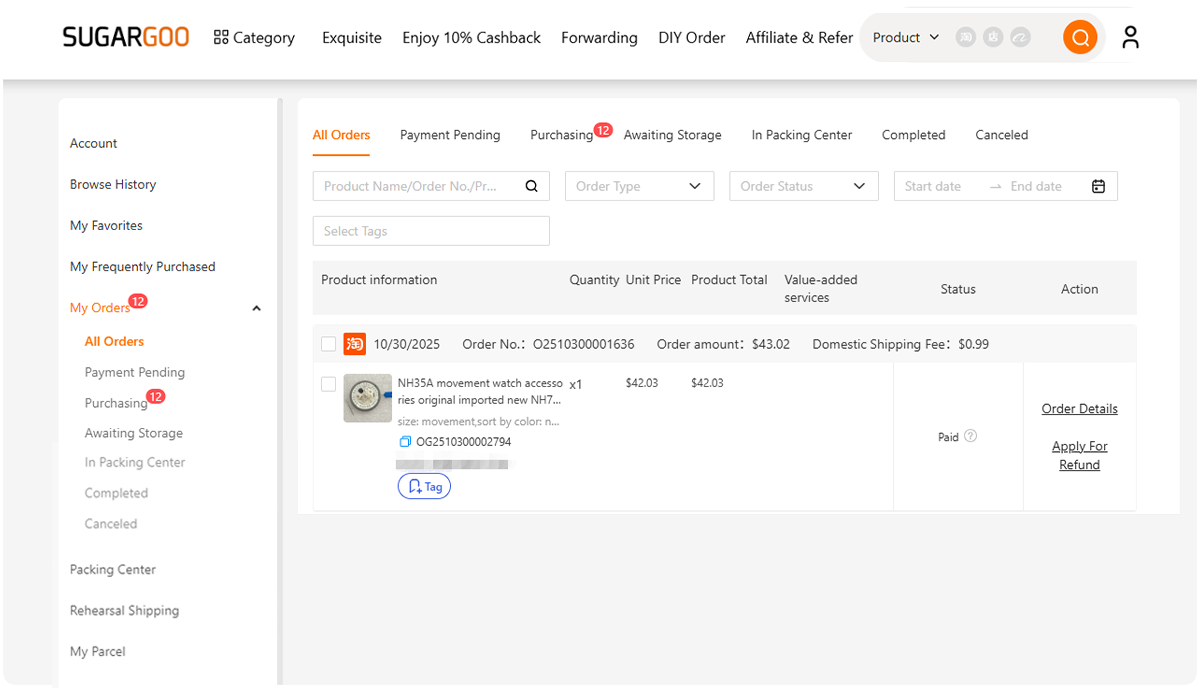
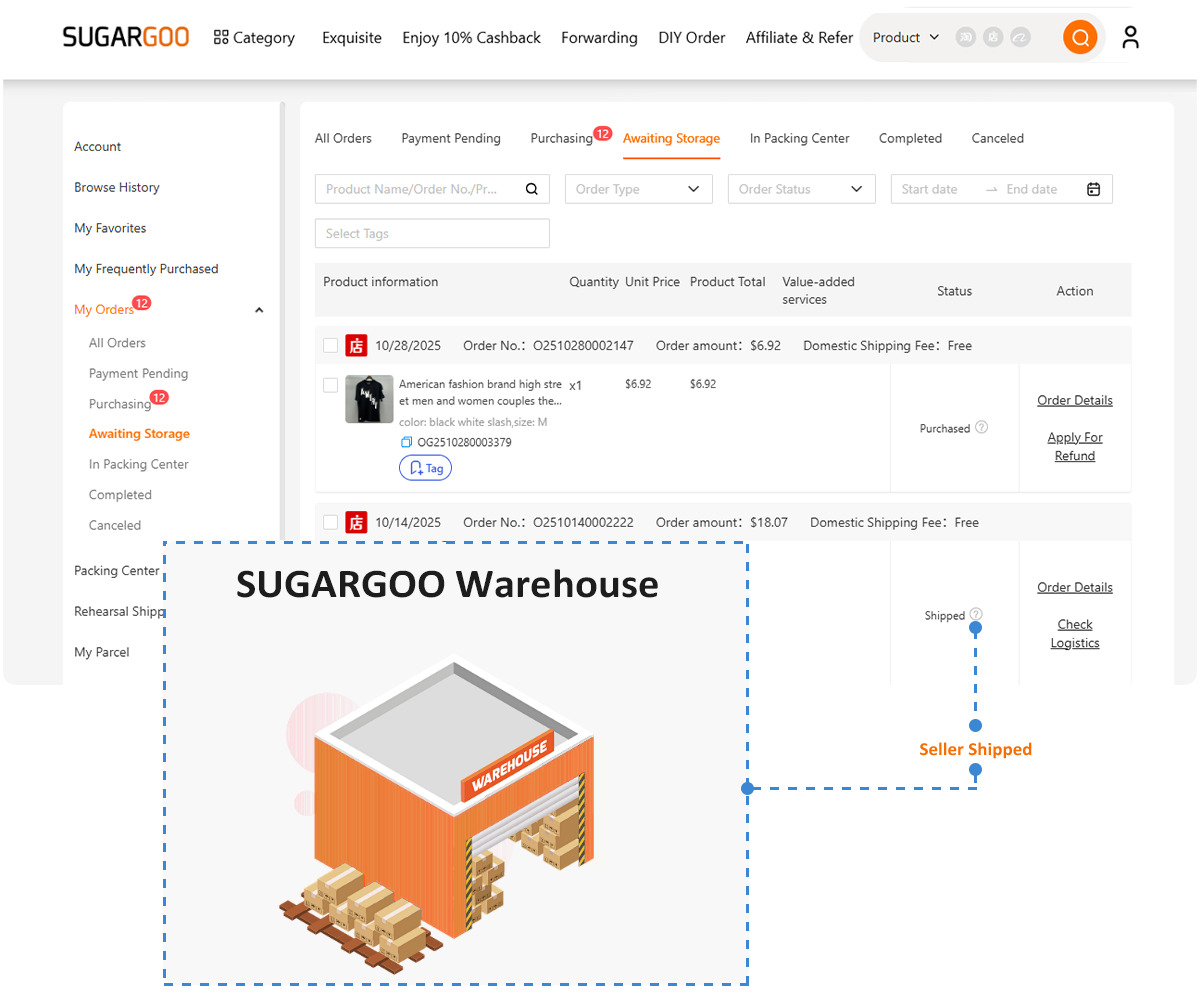
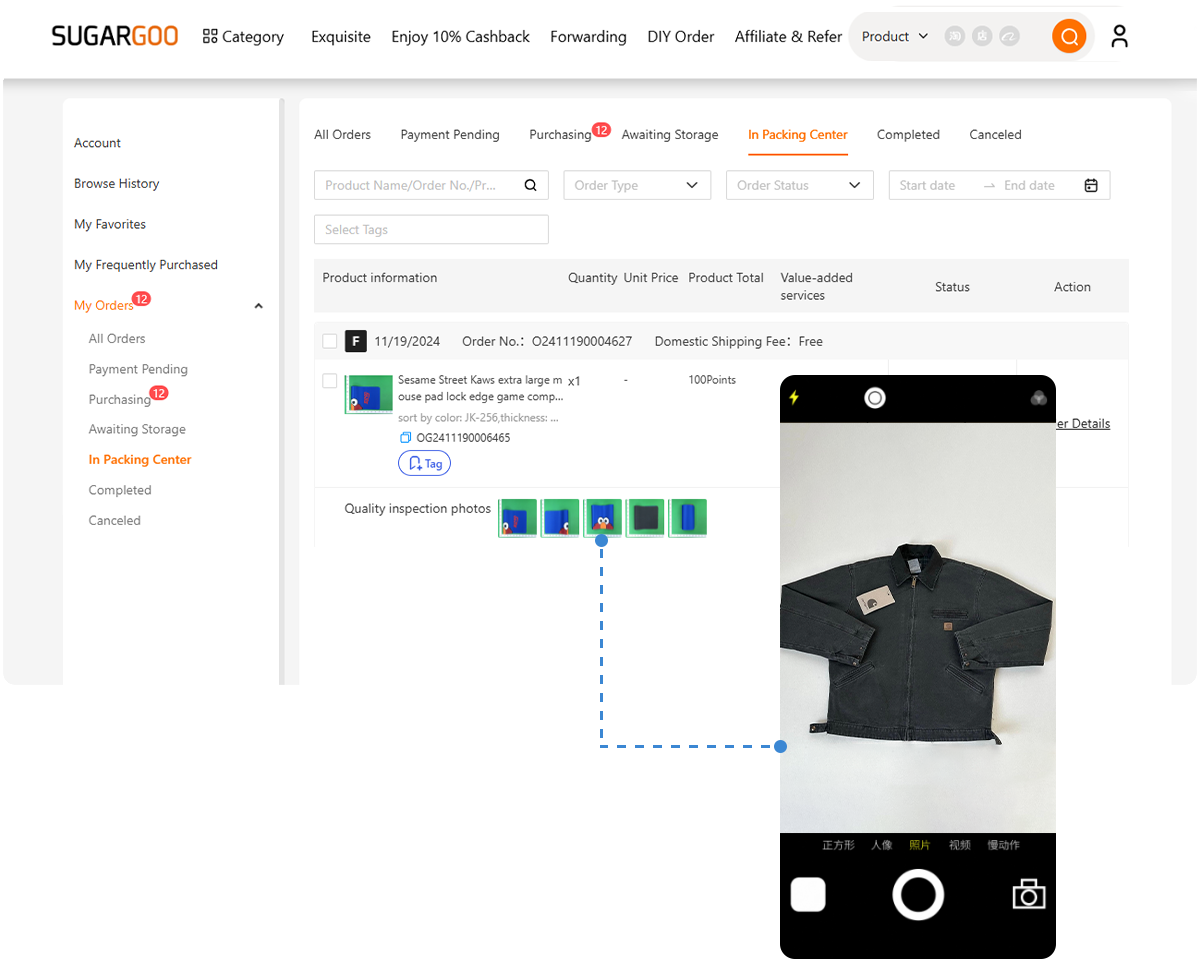
- Receiving items from different sellers into a single warehouse
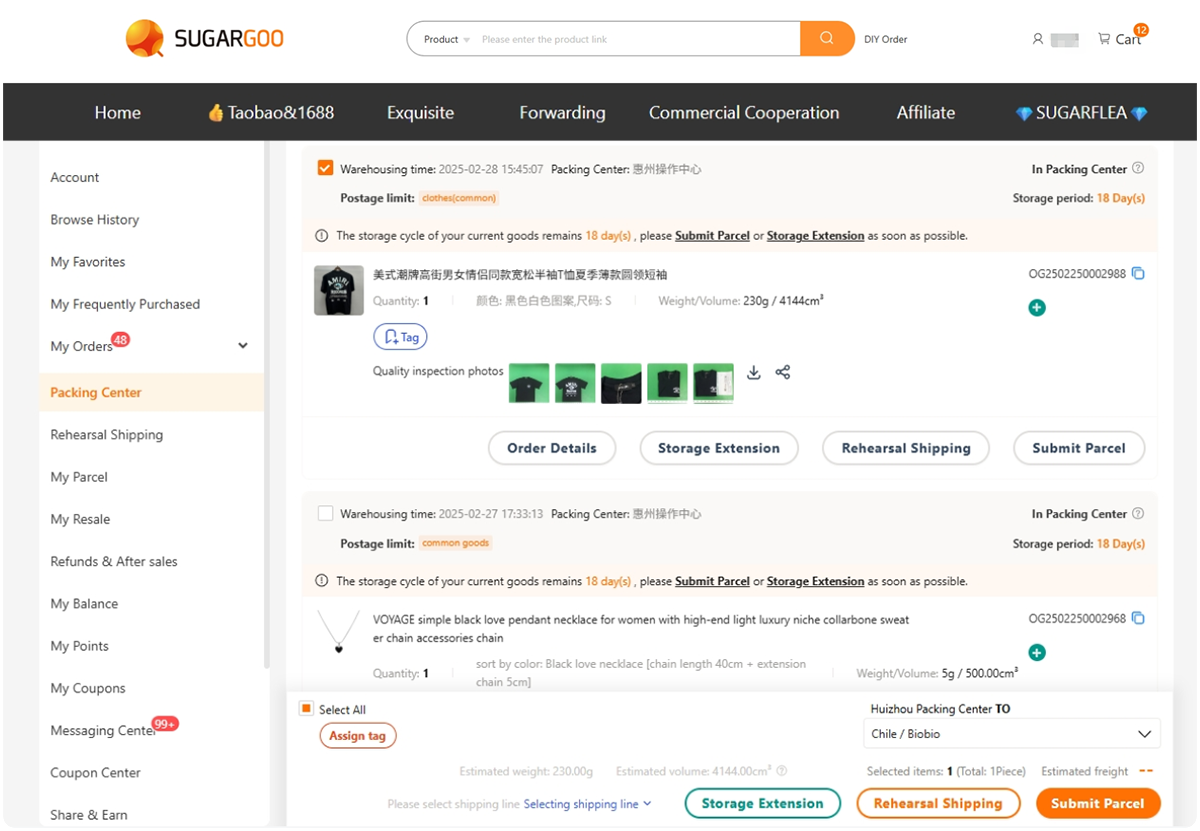
- Allowing buyers to select which items to ship together
- Repacking items into one optimized parcel
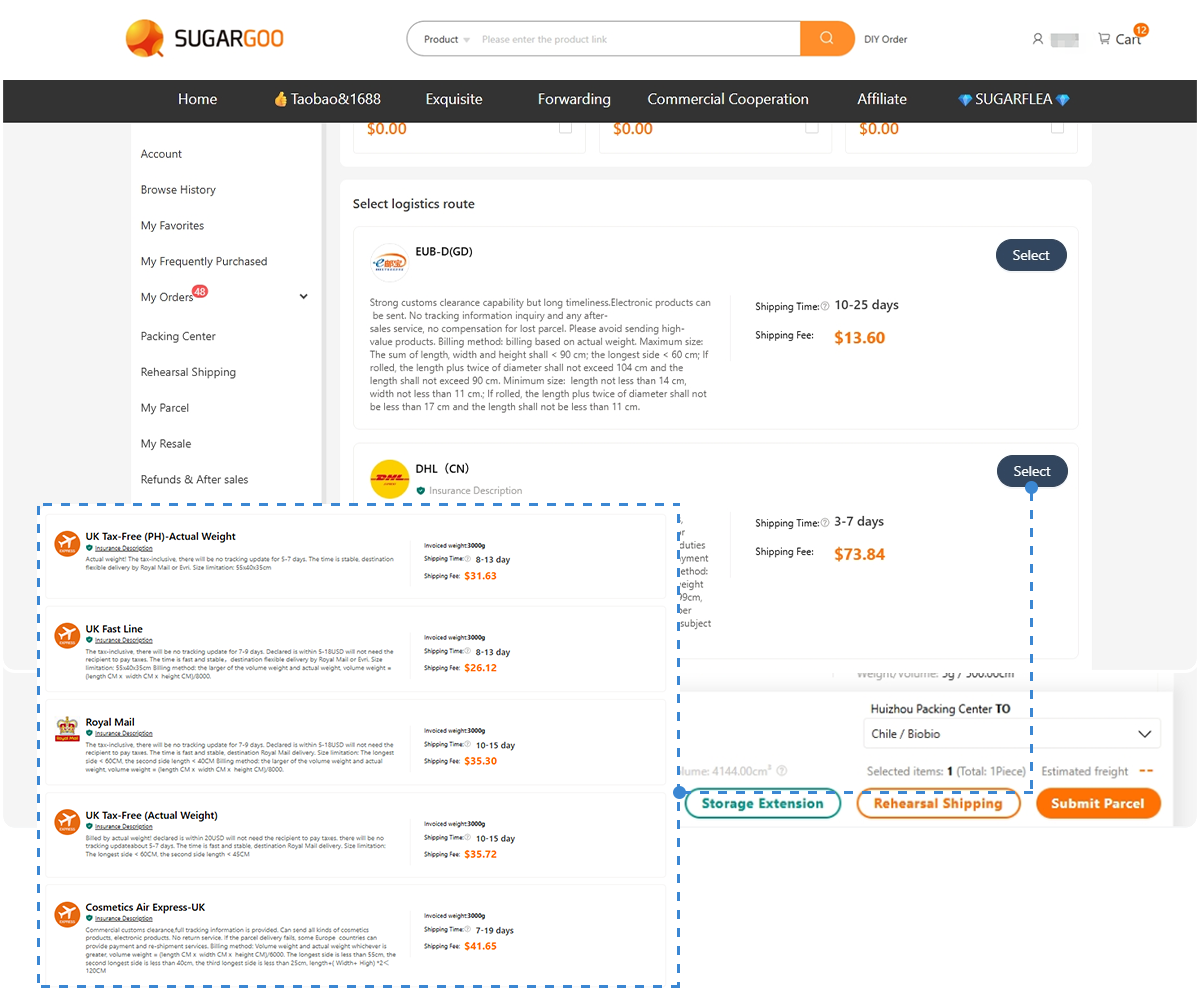
- Providing multiple international shipping routes and price comparisons
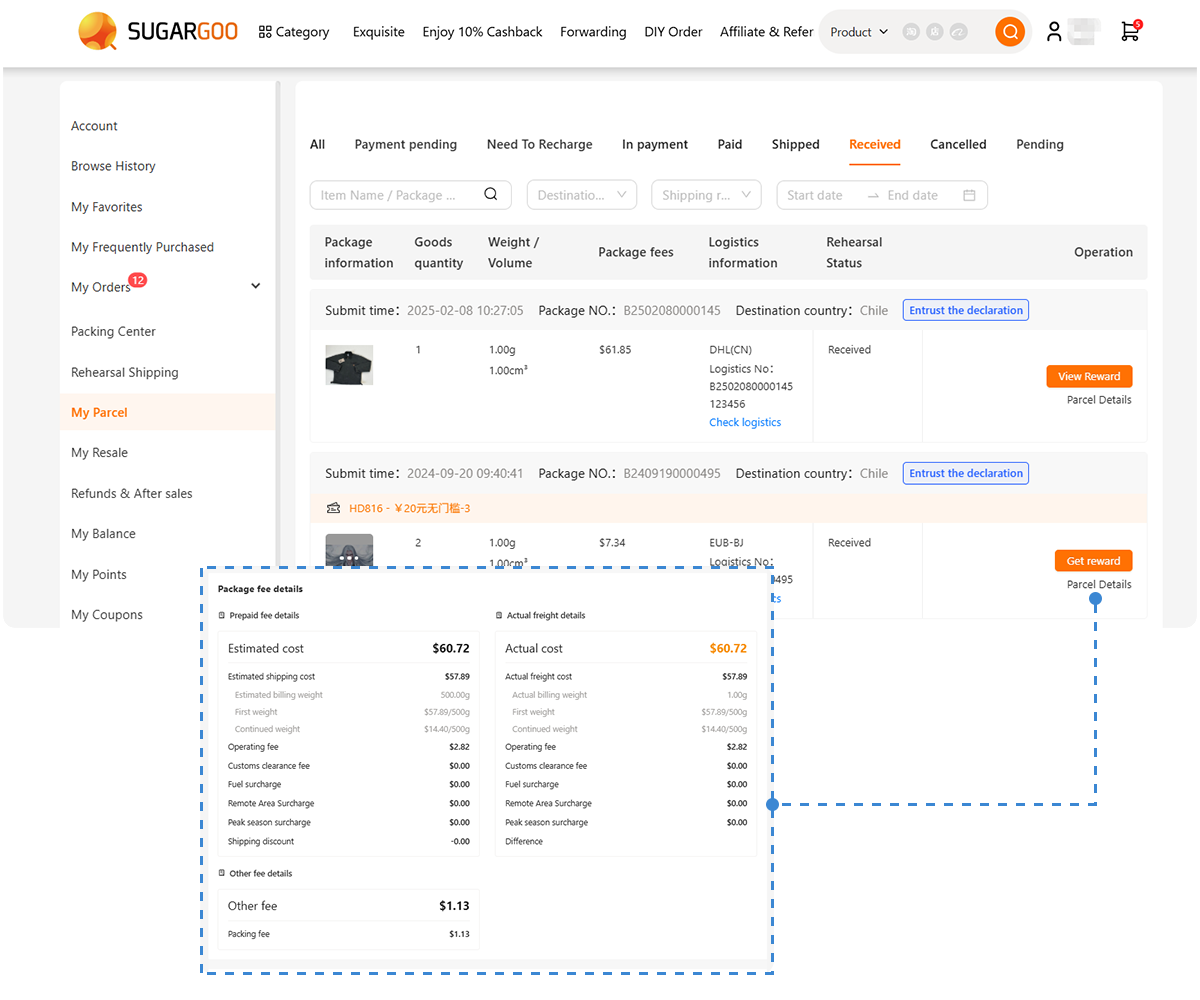
Sugargoo also uses an estimated weight system, charging an initial fee before packing and recalculating the final cost after the parcel is fully packed. Any overpayment is refunded, while underpayment is adjusted before shipment.
This transparency helps buyers avoid unexpected shipping charges.
Estimated Weight vs. Final Weight: Why Consolidation Matters
Before shipping, estimated weight includes:
- Product weight
- Seller packaging
- Anticipated outer packaging
After consolidation, unnecessary materials are removed and items are packed efficiently. This often results in a lower final weight, which means partial refunds or lower-than-expected shipping costs.
Without consolidation, buyers rarely benefit from weight adjustments.
Why Around 5kg Is Often the Optimal Parcel Size
While consolidation reduces costs, bigger is not always better. Many experienced buyers aim for parcels around 5kg, as this range offers several advantages:
- Better balance between first weight and continued weight pricing
- Lower risk of customs inspection compared to very large parcels
- Easier handling during transit
- More manageable loss or damage exposure
Consolidation allows buyers to control parcel size instead of letting sellers determine it.
Using Add-on Services to Maximize Consolidation Benefits
Consolidation becomes even more effective when paired with the right add-on services.
Product-Level Services
Selected during purchase:
- Shoe box removal
- Product inspection
- Photo confirmation
Parcel-Level Services
Selected before shipping:
- Vacuum packaging (reduces volume)
- Reinforced outer packaging (reduces damage risk)
- Waterproof wrapping (protects during transit)
These services are small investments that often prevent much larger losses.
When Package Consolidation Makes the Most Sense
Consolidation is especially effective for buyers who:
- Shop from multiple Chinese platforms
- Purchase clothing, shoes, or accessories
- Use tax-free or EU/UK routes
- Want predictable shipping costs
For single-item purchases, consolidation may offer limited benefits. For multi-item orders, it is often essential.
Conclusion: Consolidation Turns Shipping into a Controlled Process
Expensive international shipping is often treated as something buyers have no control over. In reality, the biggest cost drivers usually come from how orders are shipped — not where they are shipped to. Separate parcels, oversized boxes, and limited logistics options quietly push costs higher long before a package leaves China.
Package consolidation changes this dynamic by giving buyers structural control. When multiple items are shipped together, packaging becomes more efficient, route choices expand, and potential risks are easier to manage. The result is not just lower shipping fees, but a shipping process that behaves more predictably.
With the right warehouse support, pricing visibility, and logistics tools, consolidation becomes accessible even for beginners. Platforms such as Sugargoo bridge the gap between scattered domestic orders and a single, well-planned international shipment.
In the end, effective shipping isn’t about chasing the lowest advertised rate.
It’s about organizing your shipment so every cost has a purpose — and no money is wasted on inefficiency.