

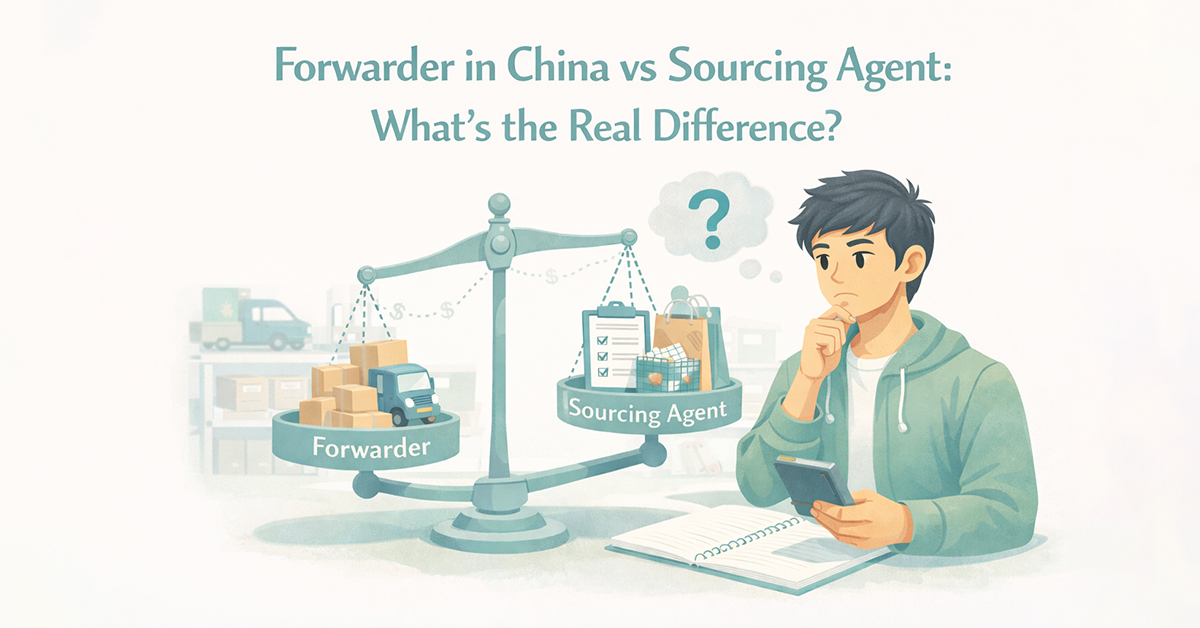
If you plan to buy products from China—whether for personal use or for business—you will almost certainly come across two terms: forwarder in China and sourcing agent. They are often confused, but in practice, they solve completely different problems.
Choosing the wrong one doesn’t just waste money—it can slow down your entire buying process.
Understanding Their Roles in Plain English
The easiest way to understand the difference is to look at when each service becomes useful.
A forwarder in China steps in after your purchase is complete. A sourcing agent, on the other hand, is involved before and during the purchase itself.
They work at different stages, not in competition with each other.
What Does a Forwarder in China Actually Do?
A forwarder in China focuses purely on logistics and delivery.
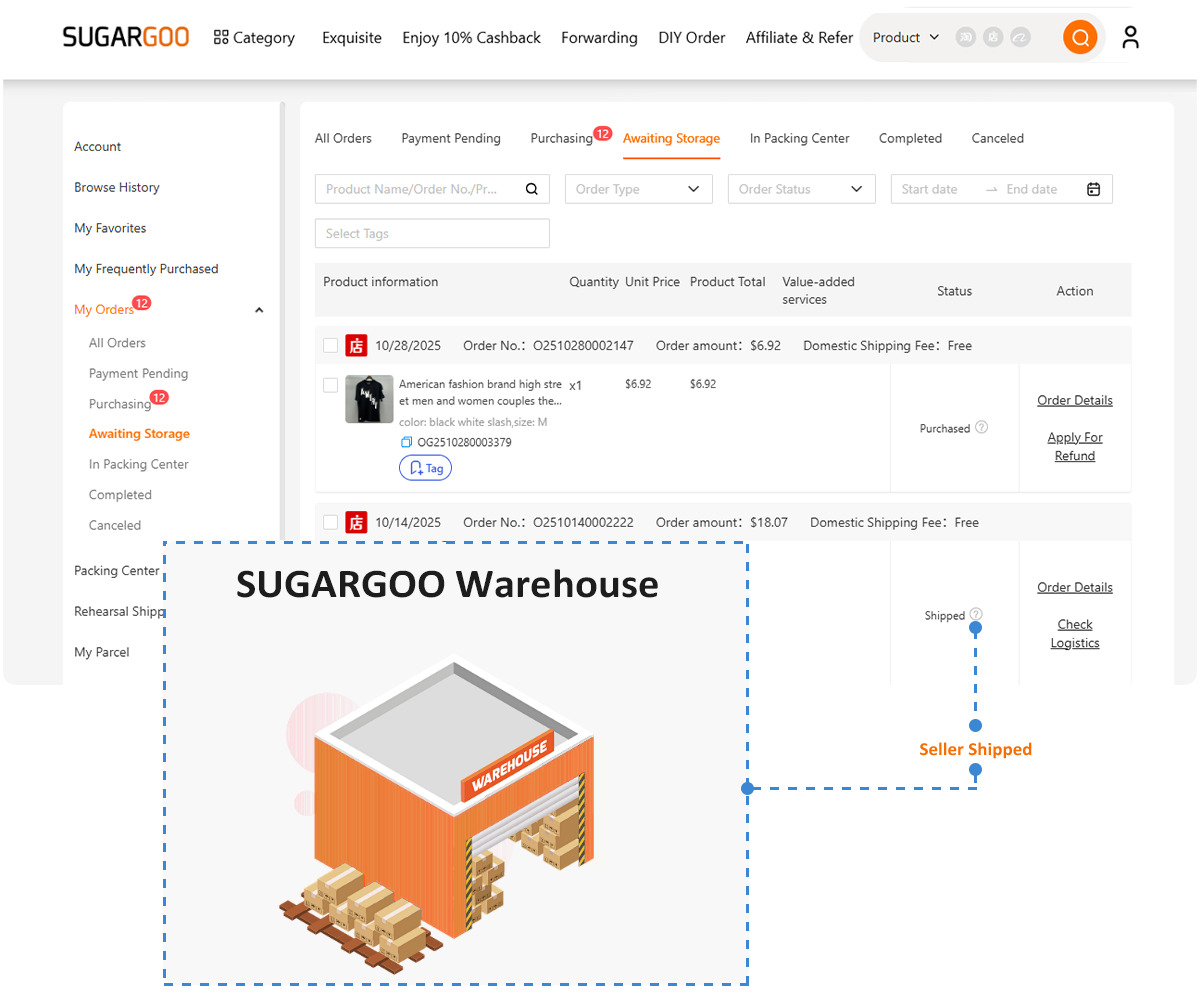
Once your items are ordered from platforms like Taobao, Weidian, or 1688, the forwarder takes over and handles everything related to getting those goods out of China and into your hands.
Typical responsibilities include:
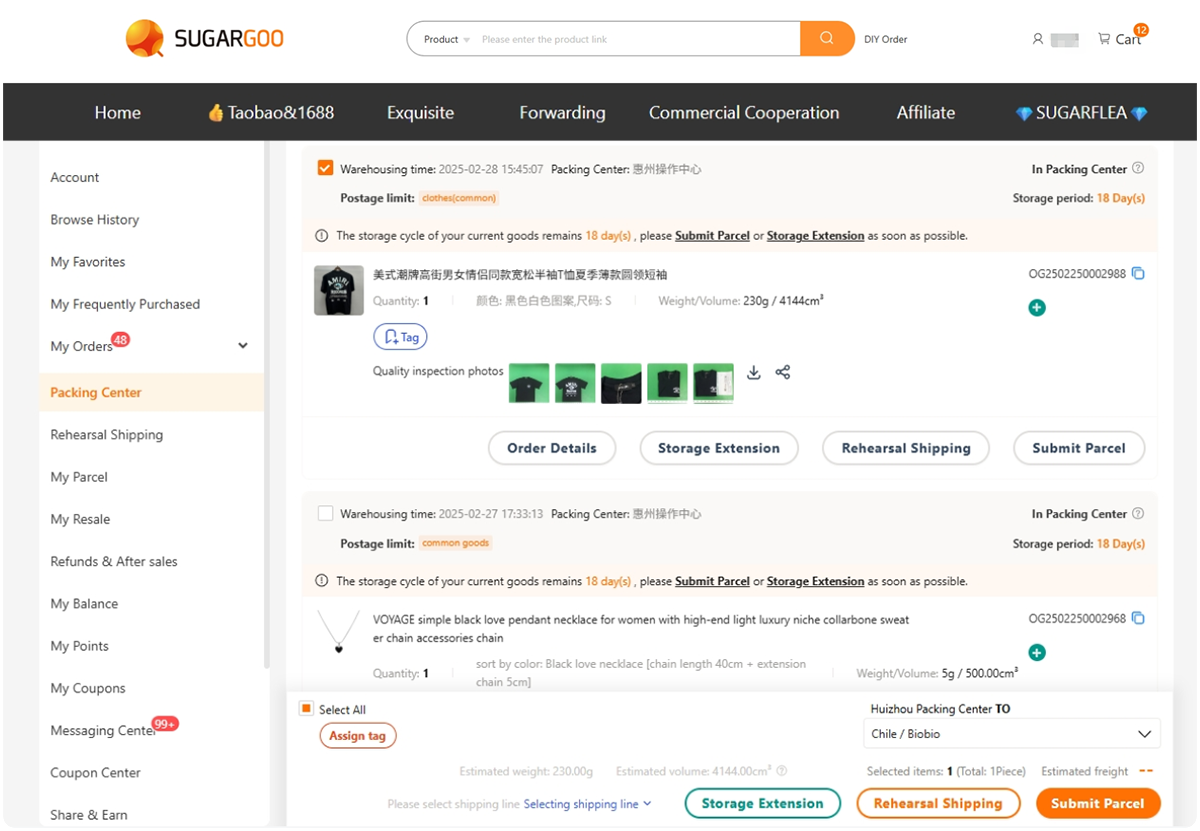
- Receiving parcels at a local warehouse
- Storing items temporarily
- Combining multiple orders into one shipment
- Repacking and reinforcing parcels
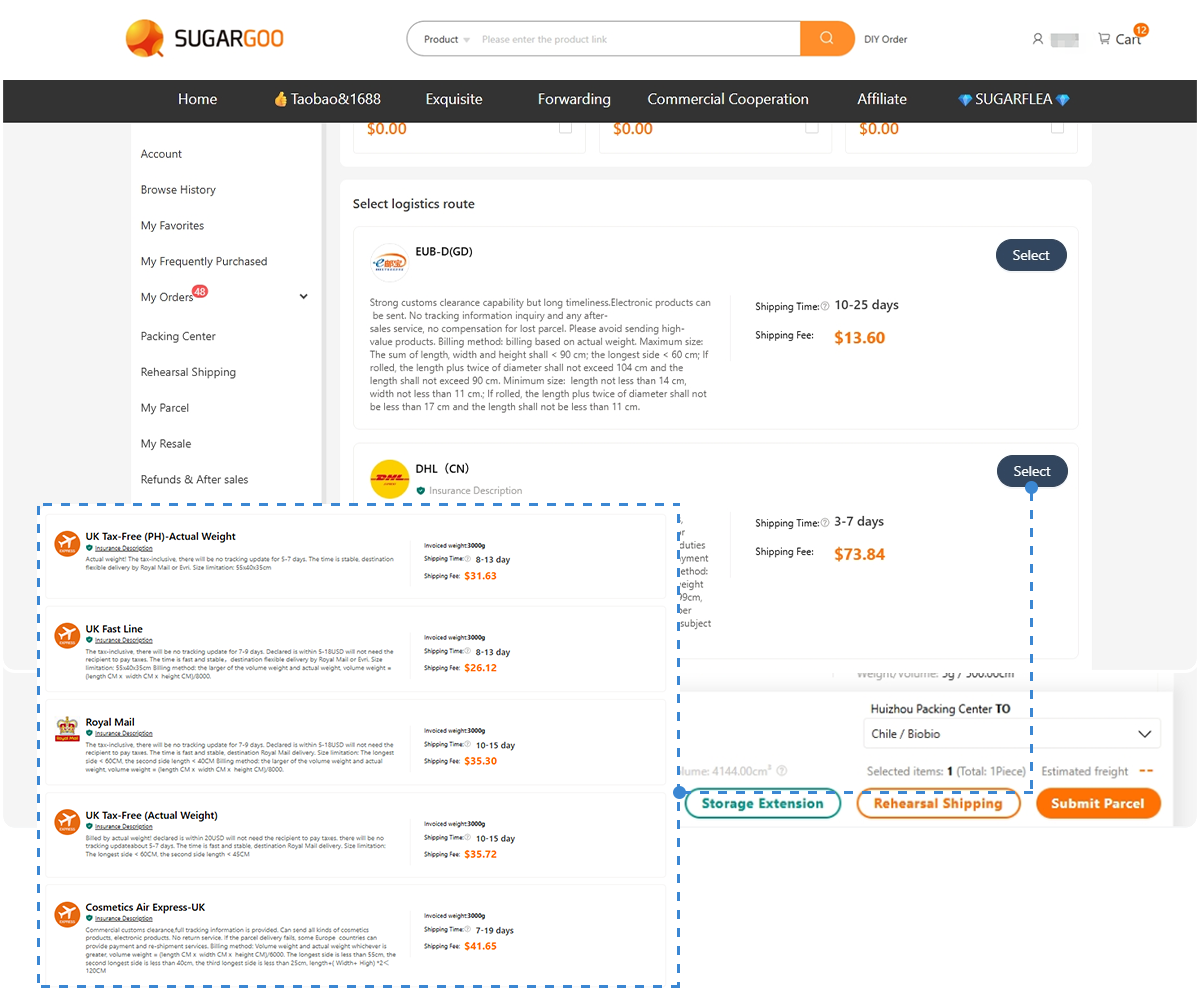
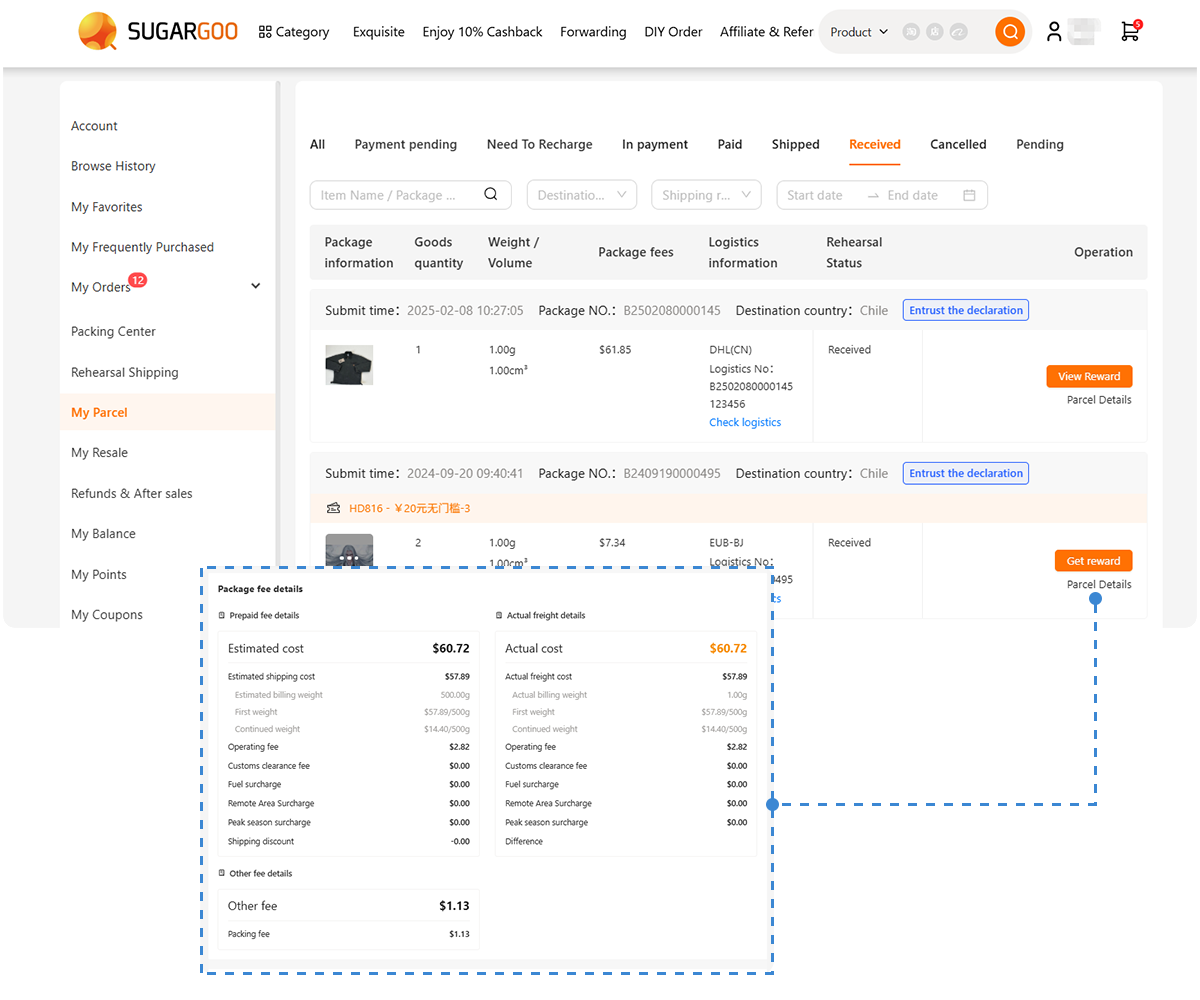
- Calculating shipping costs using freight estimation tools
- Arranging international delivery via different shipping routes
Simply put, a forwarder answers the question: “How do I ship what I already bought?”
What Is a Sourcing Agent Responsible For?
A sourcing agent operates much closer to the supply side.
Instead of shipping parcels, they help buyers navigate the Chinese market itself, especially when factories, bulk orders, or custom products are involved.
Their work usually includes:
- Searching for suitable manufacturers or suppliers
- Comparing quotes and negotiating pricing
- Handling samples and revisions
- Monitoring production schedules
- Performing quality inspections
- Coordinating bulk export preparation
A sourcing agent helps answer a different question: “What should I buy, and who should I buy it from?”
Side-by-Side Comparison
| Category | Forwarder in China | Sourcing Agent |
| Supplier search | No | Yes |
| Price negotiation | No | Yes |
| Warehouse services | Yes | Limited |
| Order consolidation | Yes | Rare |
| International shipping | Yes | Sometimes |
| Production involvement | No | Yes |
| Main focus | Delivery | Procurement |
This distinction is important because many buyers expect one service to cover everything—which often leads to disappointment.
Cost Structure: What You’re Paying For
Forwarder in China
Forwarder pricing is usually straightforward and measurable:
- Handling or processing fees
- Packing or consolidation fees
- International shipping costs (based on weight or volume)
- Optional shipping insurance
Most platforms allow buyers to estimate costs in advance using a shipping cost estimator or freight calculator, making expenses easier to plan.
Sourcing Agent
Sourcing agent fees are more variable:
- Percentage-based service fees
- Fixed project fees
- In some cases, indirect markups built into supplier quotes
Because of this, transparency matters much more when working with a sourcing agent.
Which Service Fits Your Situation?
You likely need a forwarder in China if:
- You already know what products to buy
- Orders are placed on Chinese marketplaces
- You only need help with shipping overseas
- You want to compare delivery routes and costs
You may need a sourcing agent if:
- You don’t have reliable suppliers yet
- You are ordering large quantities or custom items
- Quality control is critical
- You want help managing factories or production
Using Both: A Common Real-World Setup
Many experienced buyers don’t choose just one.
A practical workflow often looks like this:
- The sourcing agent manages suppliers, production, and inspections
- The forwarder in China handles warehousing, packing, and international delivery
By separating procurement and logistics, each service stays focused on what it does best.
Common Misconceptions to Avoid
- A forwarder does not negotiate product prices
- A sourcing agent is not always the cheapest shipping option
- One service cannot fully replace the other
Understanding these limits helps avoid unrealistic expectations.
Using Sugargoo as a Forwarder and Buying Agent in China
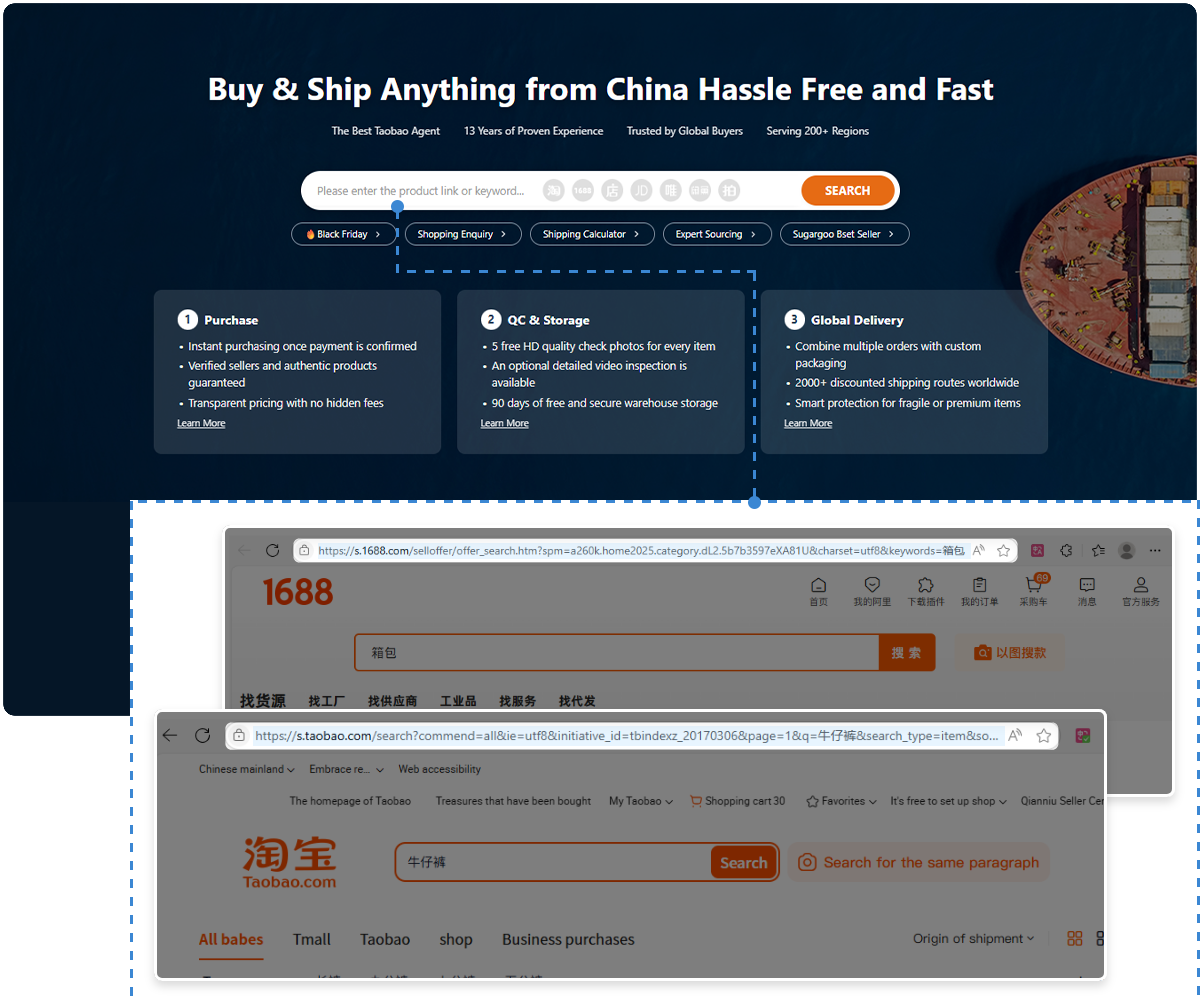
As a platform, Sugargoo combines the roles of a forwarder in China and a buying agent, which works well for individuals and small-scale sellers.
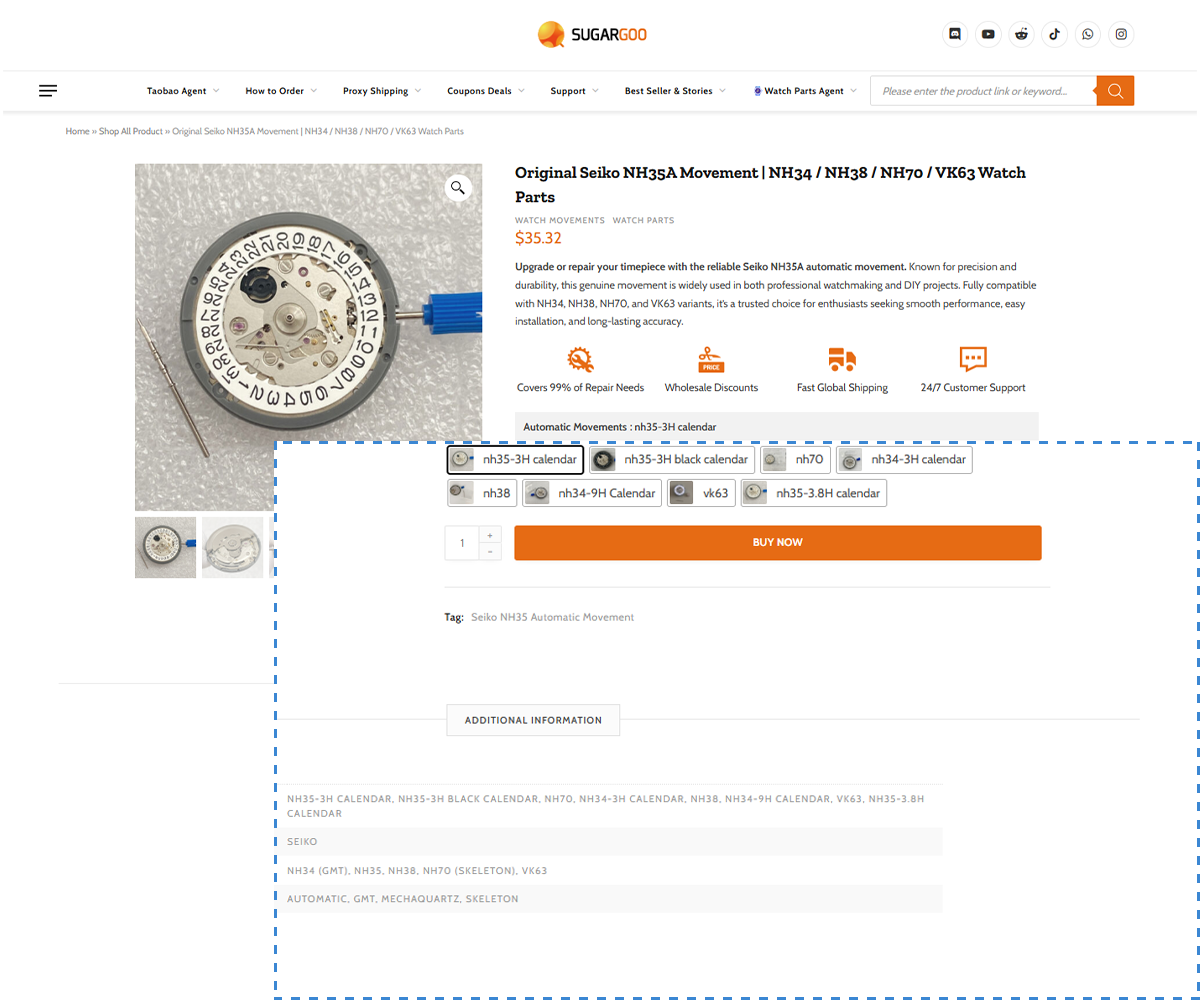
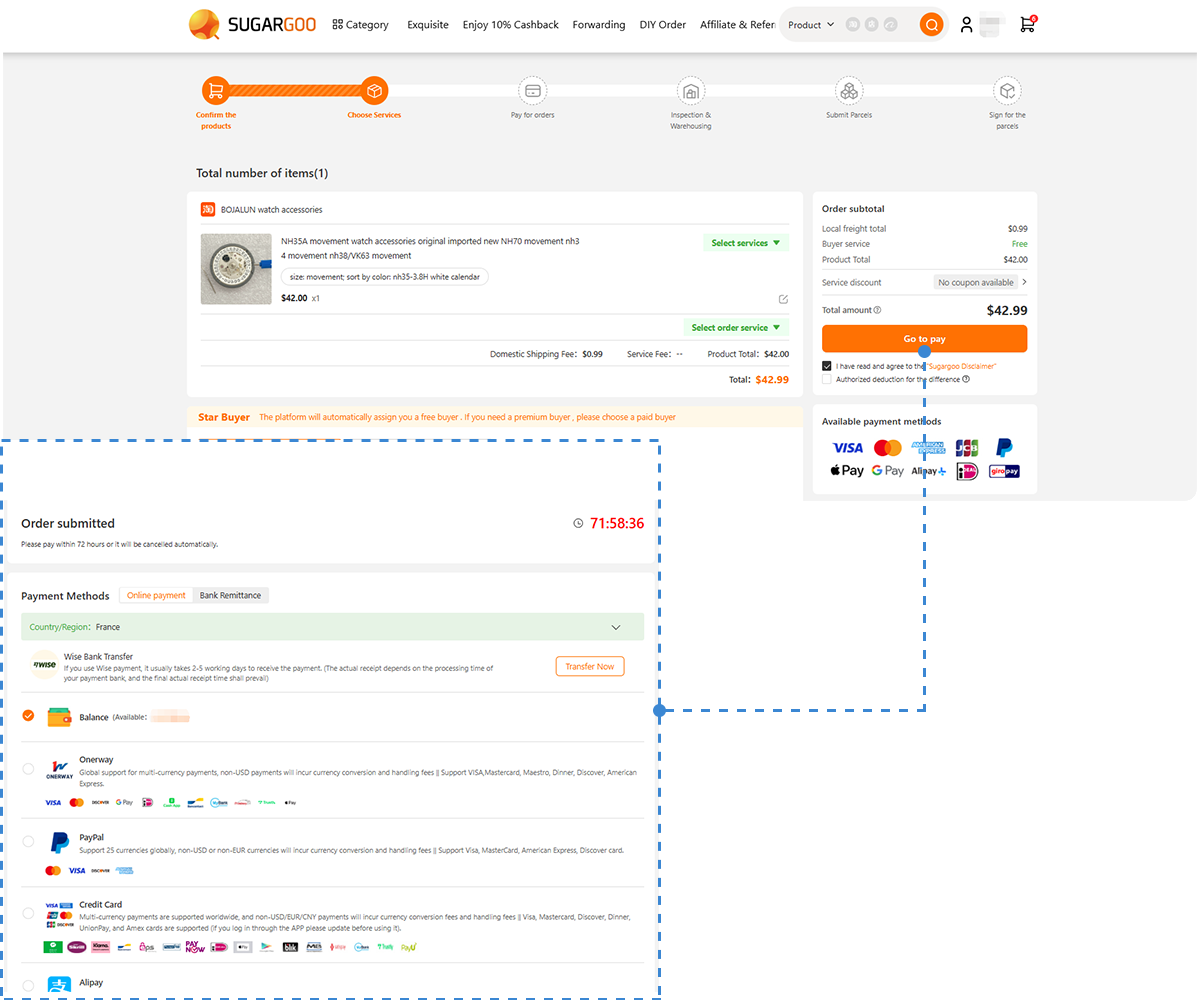
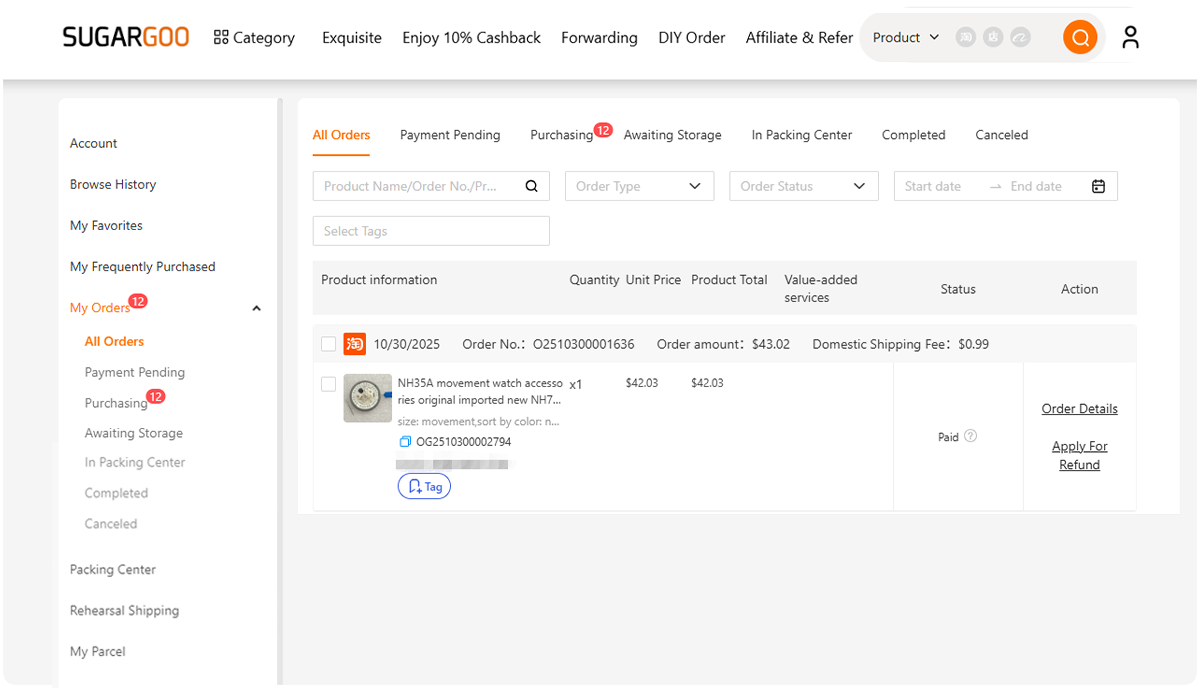
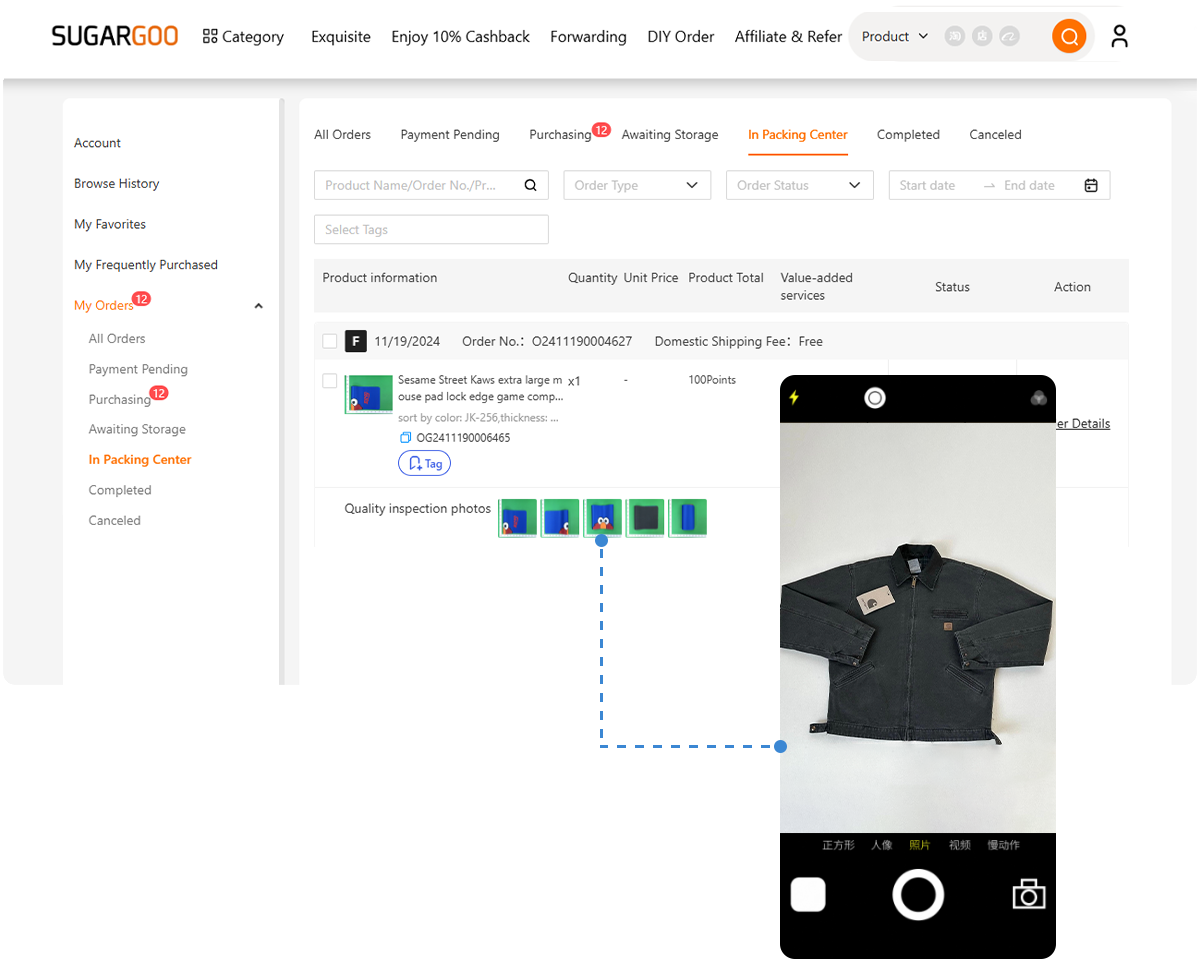
Beyond standard forwarding tasks likeinspection, order merging, protective packing, insurance options, and access to multiple international shipping routes, Sugargoo also helps users complete purchases. Users only need to provide product links from Taobao, 1688, or Weidian. From there, a buyer handles the ordering process on their behalf. This approach avoids common issues related to language or unfamiliar platforms, while allowing both the purchase and international delivery to be managed within the same workflow.
Final Takeaway
The difference between a forwarder in China and a sourcing agent isn’t about which one is better—it’s about which stage you’re in.
- If you need help finding and managing suppliers, choose a sourcing agent
- If you need help shipping purchases overseas, choose a forwarder
- For complex operations, using both is often the most efficient option
Understanding this distinction early can save time, reduce costs, and make sourcing from China far less complicated.